
I am extremely proud to have received final IRB approval for my Quantified Mechanical Loading and Bone Health Pilot Study, designed to investigate how precisely measured, individualized mechanical loading—applied through simple, real-world movement patterns—can influence bone density. The goal is to move beyond generic exercise recommendations and identify the minimum effective dose of targeted loading that can be safely integrated into someone’s daily life.
For those unfamiliar, IRB approval comes from an Institutional Review Board, a panel of independent experts who carefully review research involving human participants. Their role is to ensure the study is ethical, safe, and scientifically sound before it can begin. In practical terms, this means my entire protocol has been evaluated and approved as a valid and responsible way to conduct the research. It also means that if the study is carried out as designed and produces meaningful results, it can be considered for publication in scientific or medical journals and may help lay the groundwork for further research in this area.
Bone loss is not just a number on a scan. I have seen what it does to family, friends and clients, and it is rarely just about the bone itself. A hip or spinal fracture can completely change someone’s world in an instant. People who were independent—traveling, exercising, gardening, playing with their grandchildren or simply moving through their day without thinking about it—can suddenly depend on others for basic tasks, and their world gets much smaller. Traveling, hiking and activities they used to enjoy not becomes “high risk” and that loss of independence is a heavy weight to carry not only for them but for all those around them.
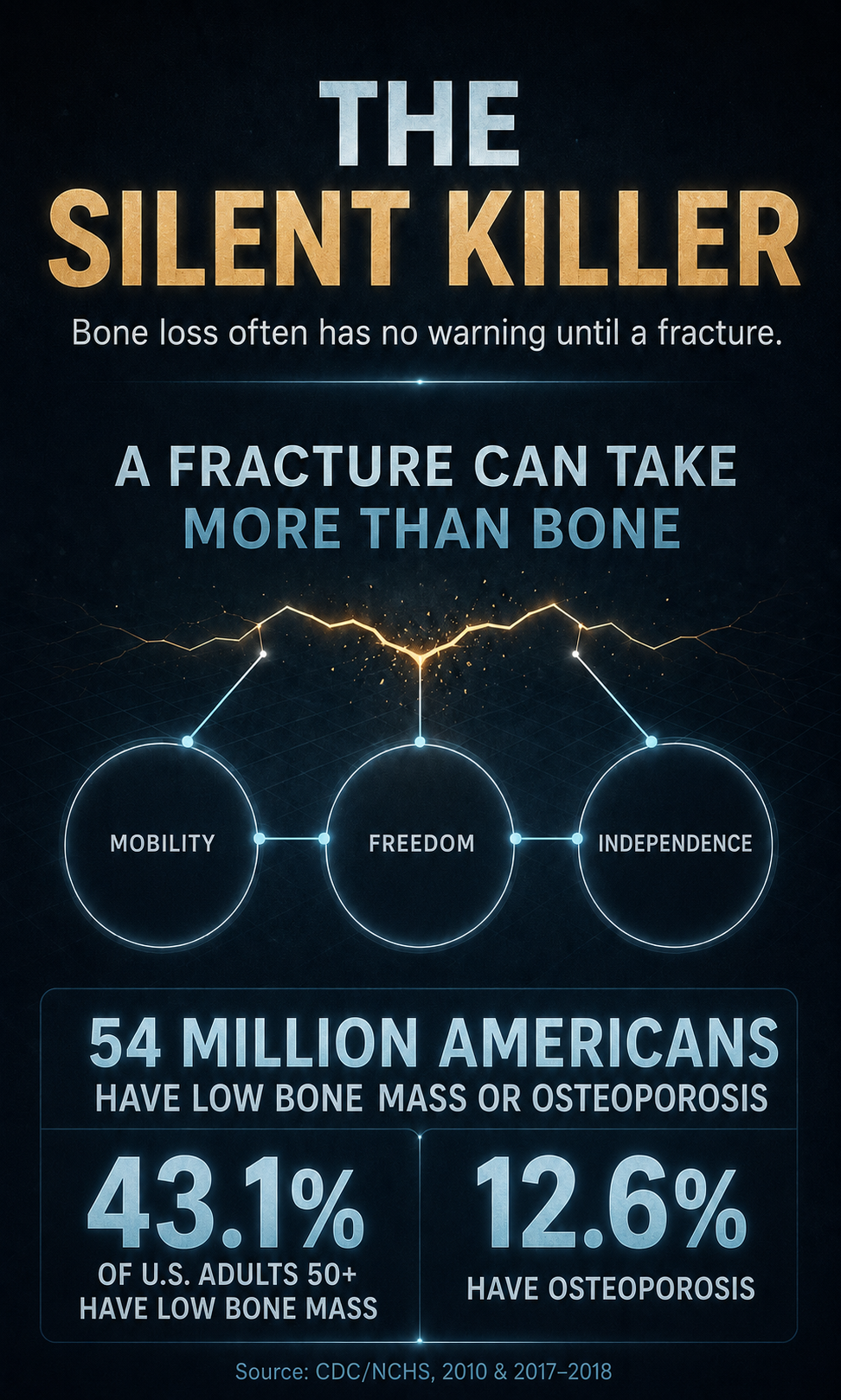
Osteoporosis is often called a “silent killer” because most people don’t feel anything until a fracture happens and it drastically reduces life span. Osteoporosis and Osteopenia affects roughly 54 million Americans over the age 50, and is not only a women’s issue either. 43.1% of adults over 50 have low bone mass and 12.6% have osteoporosis, while approximately one in two women and up to one in four men over 50 will break a bone because of it. NIAMS, CDC, Bone Health & Osteoporosis Foundation
I have also seen how broken the system can feel when prevention should be the priority. My wife experienced this firsthand when she went in for a routine checkup at age 50 and asked for a bone density scan, but was told insurance would not cover it until her 60s unless she had a family history of osteoporosis. Her doctor agreed that waiting until 60 is far too late for many women because bone loss can begin much earlier, and the scan was finally approved when my wife explained that she did have a family history. It left us frustrated because access to preventive screening seemed to depend less on medical judgment and more on insurance rules.
Medication has become the default answer, and while these drugs can be necessary and often help reduce fracture risk, they are not without tradeoffs. Commonly prescribed treatments can cause gastrointestinal or esophageal irritation, flu-like symptoms, muscle or joint pain and fatigue, and in rare cases more serious complications such as atypical femur fractures or osteonecrosis of the jaw, this list goes on. Yet many patients receive little practical guidance beyond “take this medication and do some weight-bearing exercise,” which can feel vague and overwhelming when someone is dealing with pain, fear of falling or a body that no longer feels stable.
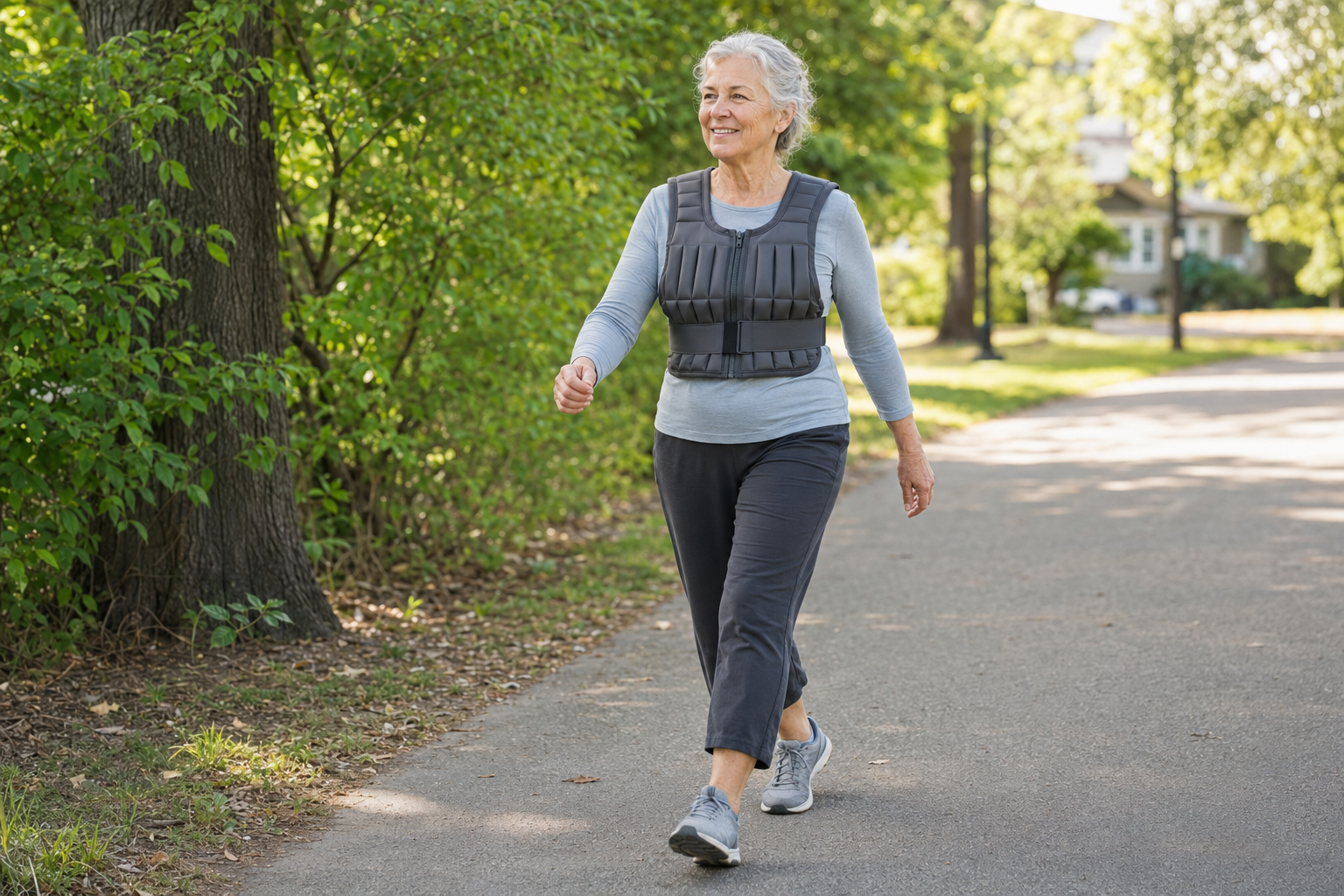
That “weight-bearing exercise” advice is where I think a lot of people get lost. Walking with a weighted vest can have value, but it is not automatically a strong or specific enough stimulus to reliably increase bone density on its own. The “right” load is not obvious, and without clear guidance about weight, frequency and progression, people may underload and assume they are doing enough, or increase it too quickly and run into pain, injury or fear that leads them to stop.
Running is another example. Impact loading can benefit bone density, but not everyone can safely start running or tolerate the intensity needed for meaningful skeletal adaptation. Someone with low bone density, poor balance, joint degeneration or years of inactivity may find that a joint, tendon or their confidence breaks down first. People are left in a difficult middle ground: walking may not be enough, running may not be accessible, and weighted vests are often underspecified.
I kept thinking there had to be a better and more individualized way, with a precise level of mechanical load based on what the person can really do, how much time they have and what their real-life constraints look like. Walking, running and weighted vests may all have value, but none automatically guarantees the specific loading someone’s bones need in a safe and repeatable way, and people should not have to rebuild their lives or spend hours in a gym every day. I wanted to understand the smallest amount of meaningful work that could make a difference, how it should change for someone with decades of training compared with someone who has never exercised, and how it could fit their lifestyle, time and available resources.
So I dug into the research, and I read and absorbed as much as I could, but reading research and making it useful for a real person are two very different things. That is the gap I have been trying to bridge: taking what science tells us may work and turning it into practical, highly individualized lifestyle choices that can support longer, healthier and more independent lives.
That is my job and part of what I do as a performance, health and longevity coach. I work with individuals—and, when needed, their trainers, physical therapists, nutritionists and doctors—using observation, research and years of experience to help them work through current limitations while making better daily decisions about exercise, recovery, sleep, nutrition and other factors that may help prevent avoidable future problems.
Receiving IRB approval does not mean I have the answer. It means I finally have the opportunity to begin the hard part: applying the research, testing my theory and finding out whether there really is a better way. This is especially important because a successful pilot study conducted under IRB oversight carries scientific weight—it can be published in peer-reviewed medical or academic journals and may help open the door for larger studies in the future.
This will take months, and I plan to share the process honestly as it unfolds—the questions, the work, what we learn and where it eventually leads.
This is where the actual hard work starts. Wish me luck.