
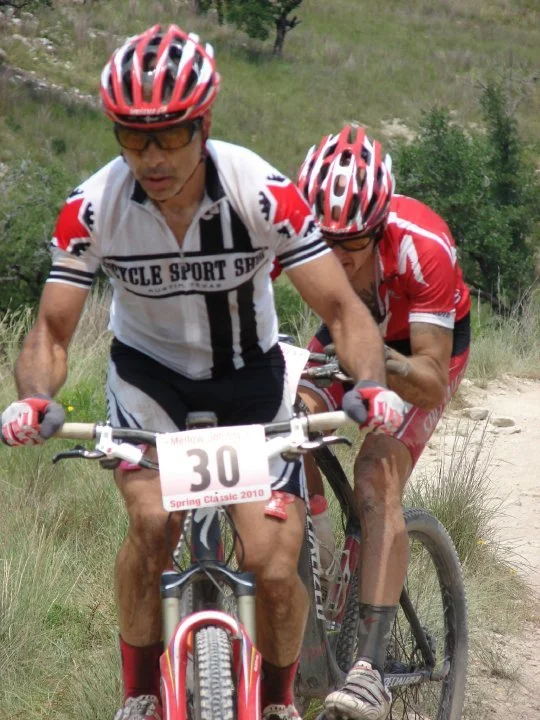
When I look back at different periods of my life, I do not see one approach that worked for everything. I see different goals, routines and versions of myself trying to figure out what worked at that time. The plan that helped me prepare for an Ironman would not have been right for mountain biking, motocross or climbing, and none of those plans could stay the same as my body, responsibilities and life changed.
I wrote before about how failure can be one of our greatest teachers, and I still believe that, but failure only helps when we pay attention and use it to make a better decision. Sometimes we need more effort, but many people who are not progressing are already trying very hard. Their plan may be too generic or may no longer fit because work, family, travel, sleep, pain, energy, equipment or the goal itself has changed.
I know what it feels like to follow a plan, work hard and still not get the result I expected. Pushing harder can sometimes hide a more important question: Is the work I planned still the right work for me today? A plan can make sense on paper and still stop working when it meets a real person in real life.
This is the problem I am trying to solve through APLC 2.0—Adaptive Performance and Longevity Coaching. I do not begin with a fixed workout, wearable or list of rules. I begin by understanding the person, what they want to accomplish, what is limiting them and what their daily life looks like. Two people can share the same goal and still need very different plans because their health, movement, schedules, stress, sleep, equipment, preferences and responses may be different.
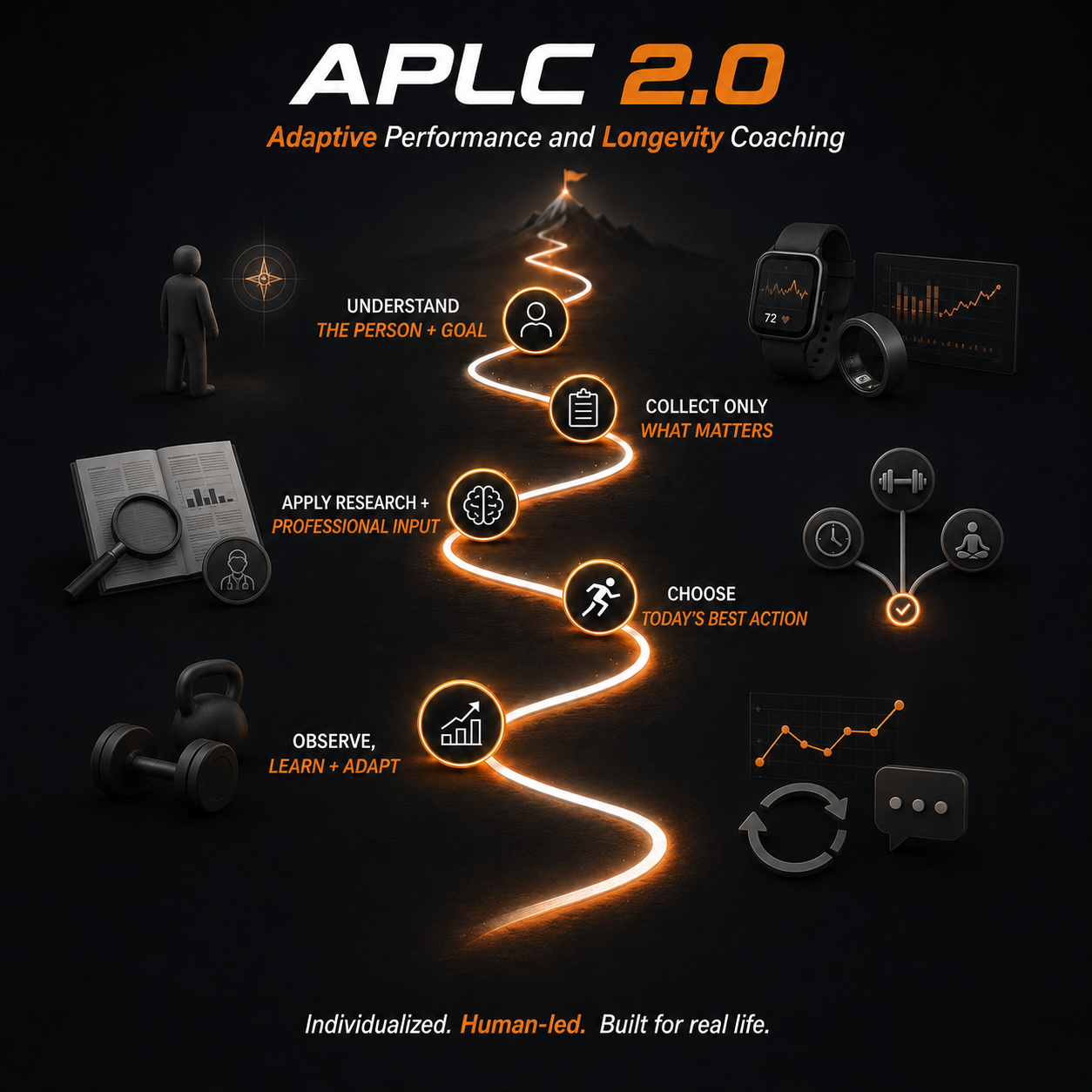
Being highly individualized does not mean collecting every possible measurement. One person may benefit from wearable data, performance testing and detailed tracking, while another may need only a few measurements, direct observation and honest feedback. Just as important as any wearable metric is the client’s own feedback—how they feel, what they notice, what is working and what is not—which often drives the most meaningful adjustments. I collect the information that is useful for that person and goal, then combine it with assessment, experience and the best available, well-supported research. Data is only useful when it helps us make a better decision.
The first change may involve exercise, but it may also involve sleep, hydration, nutrition, stress, recovery or daily workload. I start with the smallest useful change, watch how the person responds and adjust again when needed. Sometimes a small change makes a meaningful difference, and sometimes the response—both in measurable data and personal feedback—shows that we need to try something else. The plan keeps developing instead of staying the same simply because it looked good when it was written.
This is why my work does not end when I hand someone a plan. Many of the decisions that determine whether it works happen between scheduled sessions. Someone may sleep badly, become sick, develop pain, travel, lose access to equipment or suddenly have only 20 minutes available. Regular communication and ongoing client feedback help me understand what is happening and decide whether the original plan still fits. Technology can help collect and organize information, but it cannot replace decades of one-on-one experience or the judgment that comes from working closely with real people over time.
If today’s workout no longer makes sense, the only choices should not be forcing it or doing nothing. A shorter session, lower-intensity option, recovery activity, bodyweight workout or different type of movement may still support the larger goal. The plan can work in a commercial gym, home studio, hotel, outdoors or without traditional equipment. If someone has only 15 minutes and their bodyweight, that is what we use. If they have a fully equipped gym and are ready for a hard session, we use that instead.
APLC does not replace medical care. It works alongside doctors, physical therapists, trainers, nutrition professionals and other specialists when their input is useful, but I do not want to add professionals, tests, devices or complexity that someone does not need. My role is to bring together the useful information—including both objective data and subjective client feedback—and turn it into practical actions the person can carry out. That often means taking medical advice that can feel broad or difficult to apply and translating it into clear, manageable steps that fit into someone’s actual day. If a doctor recommends improving cardiovascular health, managing blood sugar, reducing pain or increasing activity, I break that down into specific routines, habits and decisions with prescription-level accuracy, based on valid research, the individual’s goals and detailed assessments. Instead of abstract goals, I create repeatable actions—how to structure a short walk during a busy workday, how to adjust training around pain or fatigue, how to improve sleep habits, or how to build consistency without overwhelming the person. The goal is not just to understand what should be done, but to make it realistic enough that it actually gets done, consistently, in a way that supports the best possible outcome over time.
The same person may need different priorities at different times, with one period focused on recovering from a setback or rebuilding capacity, another on performance and another on long-term health, and I do not see these as separate services but as changing needs within the same life that the plan should move with, while most people can begin with a defined phase focused on one clear goal rather than making an indefinite commitment, and at the end of that phase we can review what changed using both measurable outcomes and the client’s own experience so the person can decide whether to stop, continue or choose a different goal.
The purpose of APLC 2.0 is not to predict everything or create a perfect plan. It is to understand the person, collect the information that matters, use the best available evidence, make small but meaningful changes and continue adapting as the person and their life change.

A plan is only useful when it can survive real life.
If this sounds like something you have been missing, use the client-interest form below or reach out so we can have a conversation and see if this is the right fit for you.