
Most training plans don’t fail dramatically — they stall gradually
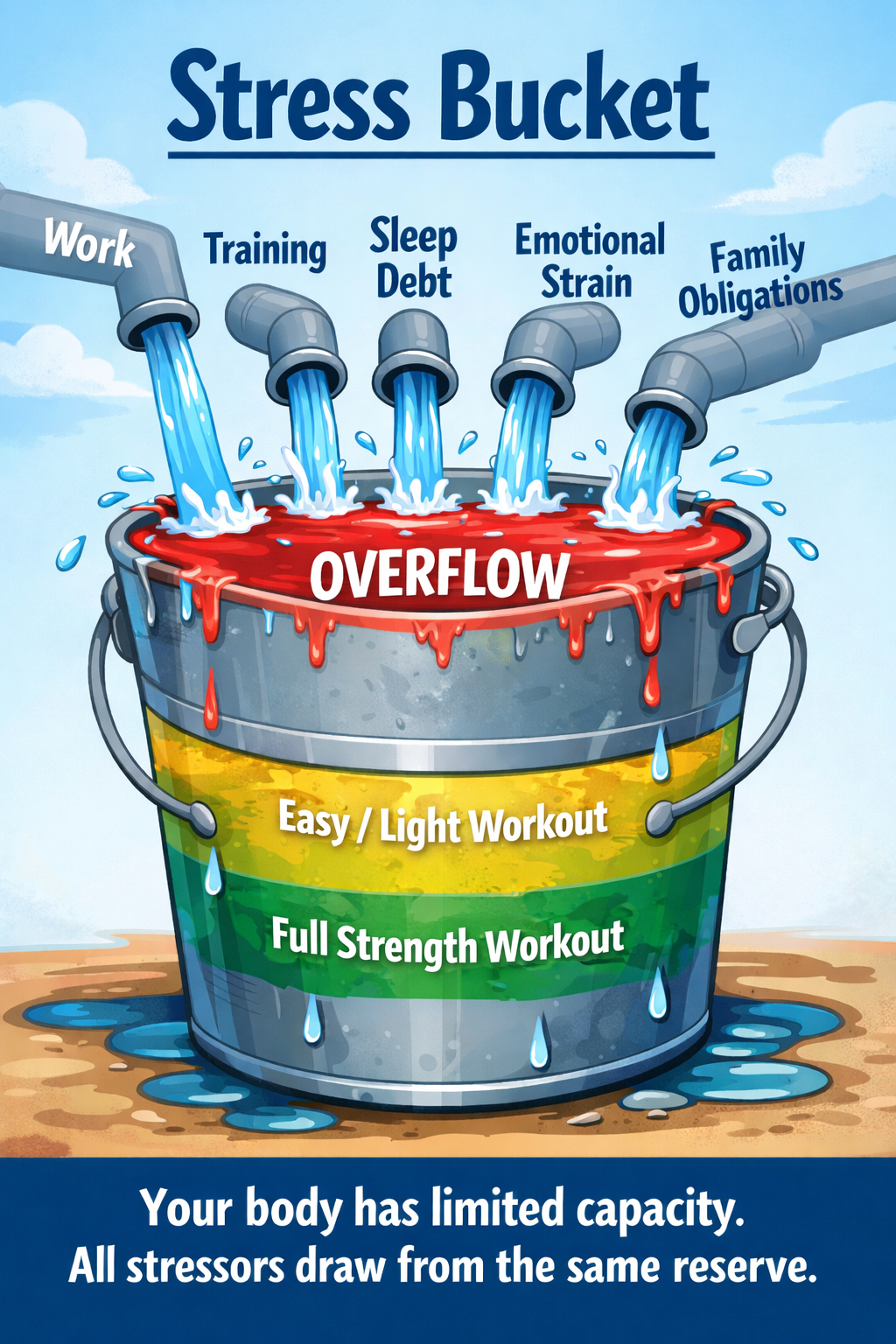
You’re still putting in the work, but progress slows, energy becomes inconsistent, small injuries linger, and recovery takes longer than it used to. It’s easy to assume you need more discipline or a better program.
That’s rarely the problem.
The real issue is that most plans assume your capacity is stable. In reality, your ability to train and adapt shifts constantly based on sleep, stress, workload, travel, accumulated fatigue, and underlying health factors. When those inputs change, but the plan doesn’t, performance plateaus, and recovery debt quietly builds.
The constraint isn’t effort. It’s that the system isn’t adapting.
I replace static programming with a real-time execution system. Instead of following a fixed template, your training adjusts to your actual capacity day by day — before breakdown happens, not after.
How Decisions Are Made
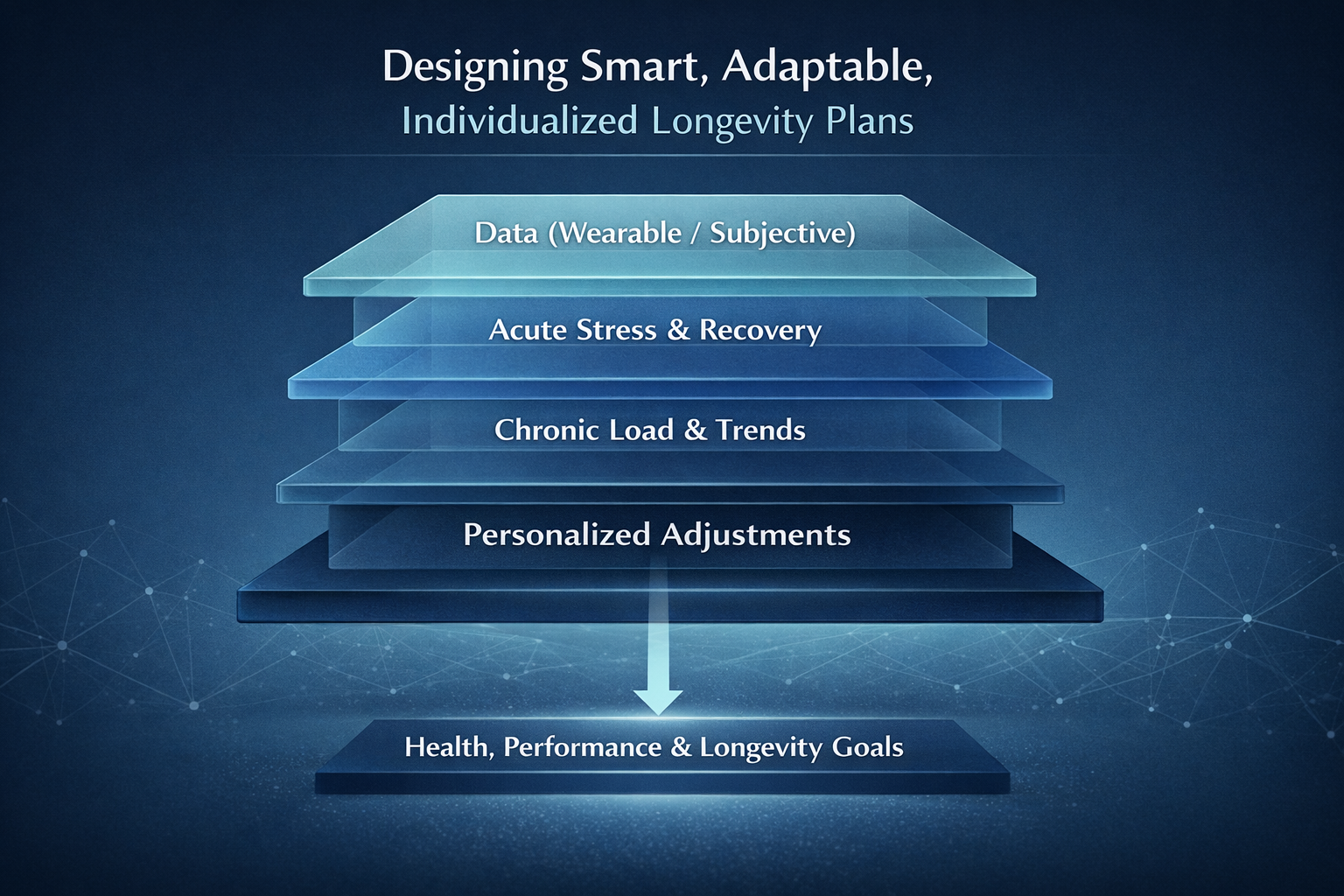
This approach is data-informed, not data-obsessed. The goal isn’t to track everything — it’s to track the few signals that meaningfully change decisions.
We focus on three questions:
What is your current capacity?
What is your recovery state?
What level of risk is present?
That may include targeted assessments, wearable data related to sleep and load tolerance, relevant health history, and labs when they add real decision value. If a metric doesn’t influence what you do today, it doesn’t belong in the system.
Each day falls into a simple decision framework:
Green: Capacity is available → train and progress strategically.
Yellow: Capacity is constrained → adjust load or intensity.
Red: Recovery or risk dominates → restore and protect.
This isn’t about doing less. It’s about doing what actually compounds.
Why That Matters Long-Term

Short-term performance is easy to chase. Long-term performance requires protecting the systems that drive it.
Daily adjustments are designed to:
Drive short-term performance
Reduce long-term wear and tear
Avoid the burnout-injury-rest cycle
Build capacity without borrowing from longevity
The goal isn’t just better workouts next month. It’s sustainable performance over years.
Who This Is For
This system is designed for already-active individuals who feel like effort alone isn’t producing the return it used to.
It’s a strong fit if you:
Train consistently but feel plateaued
Want to progress without accumulating injuries
Need a plan that adapts to real life
Care about understanding the “why,” not just the “what”
Value long-term health alongside performance
It’s not a fit if you’re looking for a fixed template, quick fixes, or a generic plan you can run without communication. This system works when decisions are informed — and when progress is measured over months and years, not weeks.
Getting Started
Everything begins with clarity about where you actually are. Send a short message outlining where you feel stuck and what you want to improve. If an assessment makes sense, I’ll invite you to schedule one. If it doesn’t, I’ll tell you.
From there, we build a system that adjusts day by day — helping you move forward consistently, without quietly accumulating cost.