
I design and coach personalized health and performance protocols that prevent chronic decline and improve long-term capacity. I take wearable data, lab results, and health history and turn them into day-to-day decisions that adapt in real time — so you consistently make the right choices for your health, not just follow a plan.
How the System Works
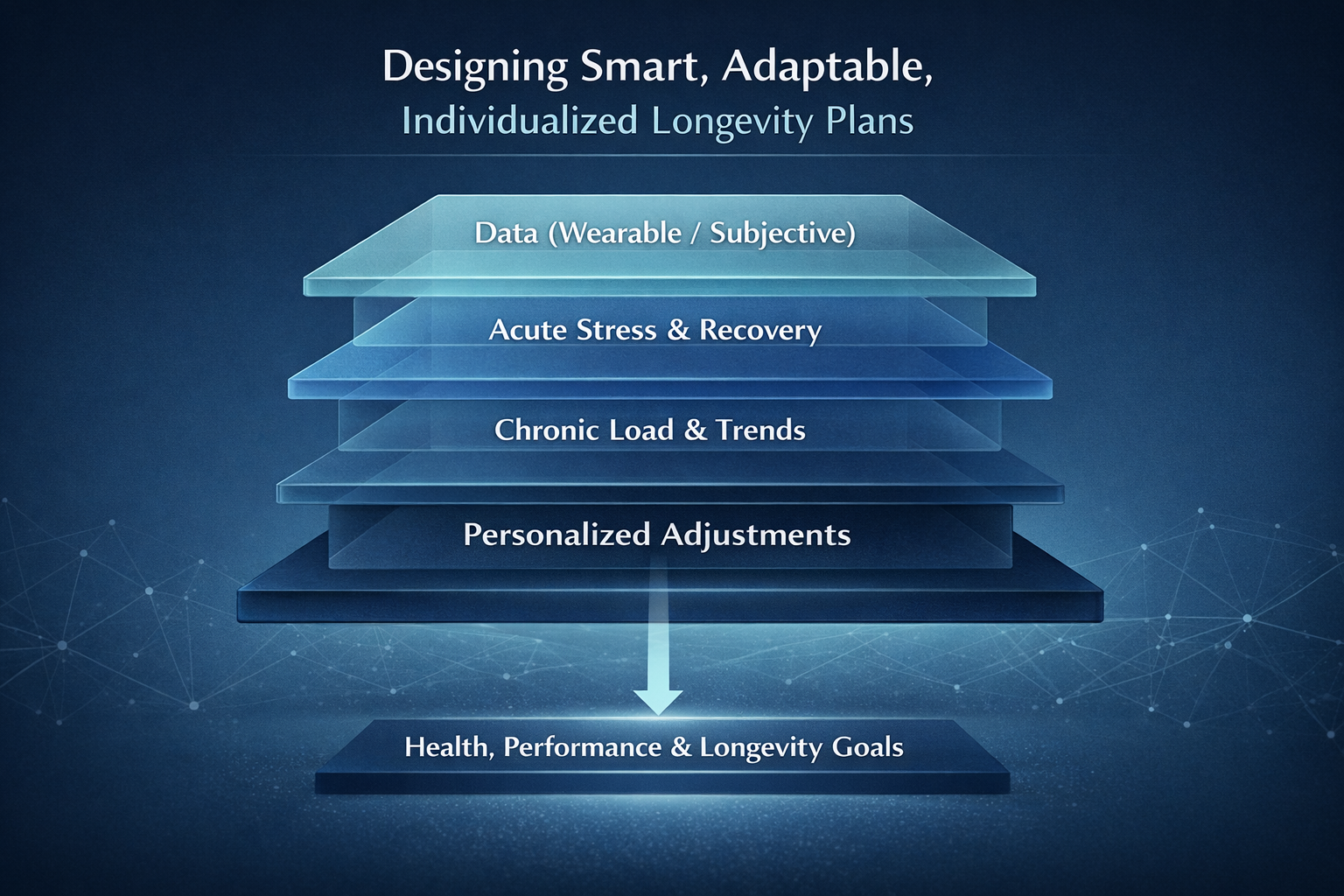
This is a real-time execution loop.
Each day’s work is guided by current inputs, including:
How you’re feeling
Pain or discomfort
Movement quality
Readiness and relevant data
Based on those inputs, the focus of the day shifts:
If pain is present → rehabilitation
If risk is identified → prehab
If capacity is high → performance
All paths → long-term health and longevity
Training, prehab, and rehab are not separate programs — they are decision states within one adaptive system.
Plans are drafted using evidence-based frameworks.
Final decisions are refined through live observation, feedback, and context — in person or virtually.
Data, Tracking, and Choice
More data allows for faster feedback, clearer patterns, and earlier course correction — often leading to better outcomes in less time.
But how much data we use is always your choice.
Some clients prefer:
Comprehensive tracking with wearables and testing
Simpler inputs with periodic check-ins
Minimal tracking with structured assessments only
My role is to:
Explain trade-offs clearly
Recommend what improves outcomes
Work within your comfort level
The approach stays the same — only the depth changes.