
For most of Lauren’s life, being active wasn’t something she had to convince herself to do. It was simply part of who she was. She had done pre-professional ballet, yoga, aerial silks, cycling, Pilates and more, and she was the kind of person who could ride her bike for miles through a Texas summer and think very little about the fact that it was 100 degrees outside. Then, at 29 years old, she suffered a sudden cardiac arrest, and what followed over the next several years was a completely different relationship with her body, one that became increasingly difficult to understand as major life events, serious bouts of COVID and other unexplained health problems piled on top of one another.
Lauren kept trying to get herself back. She started roller skating and rock climbing, went back to the gym and kept looking for ways to become more active again, because when you have spent your life identifying as an athletic person, it makes sense to believe that getting stronger and working harder should eventually lead you back toward the person you remember being. Some of those efforts helped, but other times she would finish a workout and then crash for days afterward, so exhausted that work became difficult and simply getting out of bed and making it through the day could feel like an accomplishment. The harder she tried to “bounce back,” the more confusing the relationship between effort and outcome seemed to become.
Heat became one of the clearest examples of just how much her life had changed. This was someone who had lived in Texas most of her life and remembered riding for miles in triple-digit temperatures, yet she began experiencing severe heat-related symptoms in temperatures that would once have been completely normal for her, sometimes even when it was only in the 70s. Texas summers, something that had always simply been part of her life, became something she increasingly had to avoid and worry about.
She did what most of us would hope we would do in that situation: she looked for answers. Over several years she saw different doctors and specialists, had bloodwork and other testing done, and spent hundreds if not thousands of dollars trying to understand why she felt the way she did. She also tried yoga, meditation, acupuncture, therapy, supplements and a long list of other approaches, but she kept finding herself in essentially the same place, with pieces of information and recommendations but without a practical explanation for how all of those pieces fit together in her actual life.
Lauren described that period in a way that probably captures the frustration better than anything I could write for her: “I started to stress about being stressed, not knowing how much more I could do to further reduce my stress aside from striking it rich somehow and moving to an island where I didn’t have to work and had no responsibilities.” She had already tried yoga, meditation, acupuncture, therapy and supplements, so being told once again that she was probably too stressed didn’t give her much of an answer for what she was supposed to do differently on Tuesday morning.
Regular fitness advice wasn’t helping much either. Lauren kept hearing versions of the same messages most active people hear: just do it, think positively, use mind over matter, keep pushing and don’t let yourself focus on how you feel. The problem was that every time she tried to apply that mentality to what was happening to her, it could backfire badly. As she put it, “Mind over matter only works until the matter rebels, after all. Or in my case, til it flat out crashes out and lands you in a hospital so many times you know you have to try something else.”
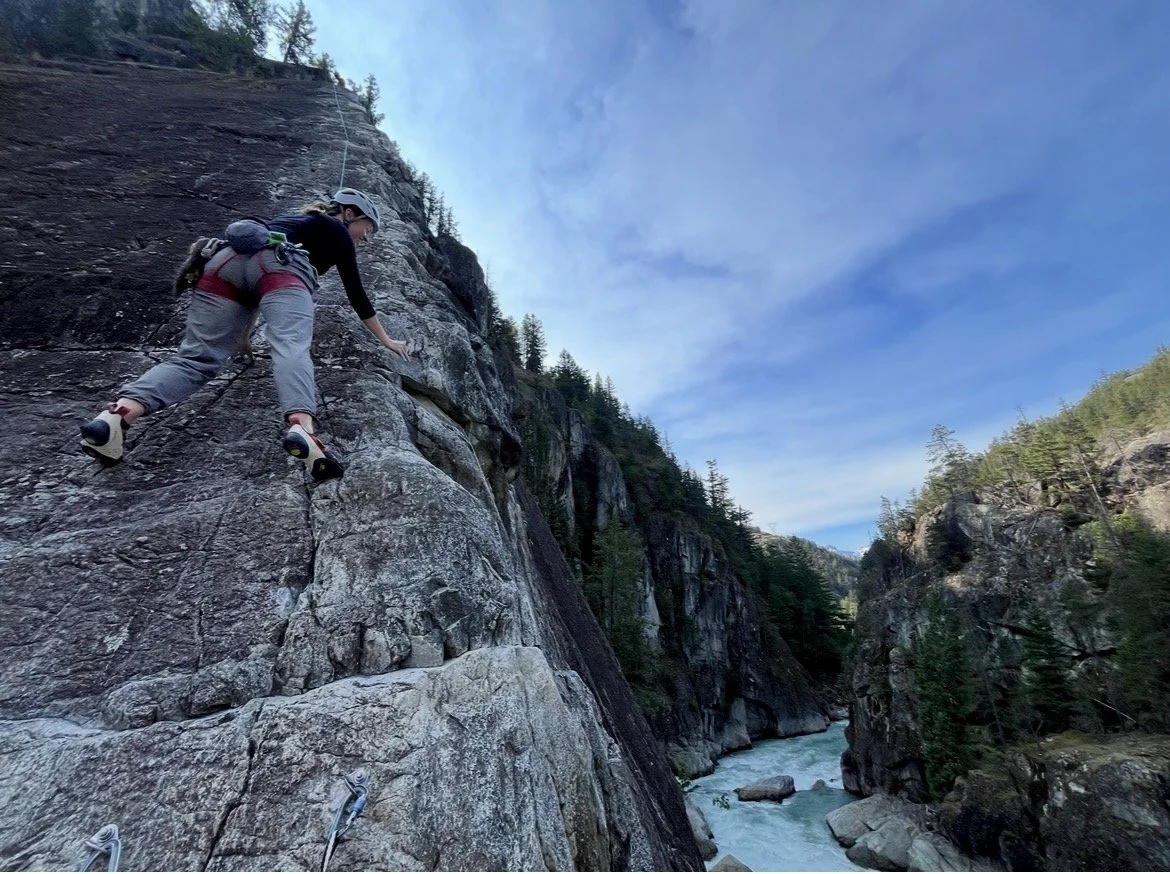
By the time I reached out to Lauren and offered to see if I could help, she told me later that she was literally lying on her couch in sweatpants, crying because she was exhausted, didn’t know what else to try, didn’t know which doctor she was supposed to see next and was beginning to feel as if maybe this was simply what her life was going to be from then on. That part of her story is hard for me to forget, especially when I look at the pictures she recently sent me of herself climbing outside, because the woman hanging on a rock wall beside a river looks very different from someone lying on a couch wondering whether all the doors had closed.
What I did not do when I started working with Lauren was decide in advance what her answer was going to be. I never begin that way, especially with someone whose situation is complicated, because the fact that something works well for most people doesn’t automatically tell me whether it is the right thing for the person sitting in front of me. My first job was to understand Lauren well enough to form a reasonable working theory about what might be contributing to what she was experiencing, then pressure-test that thinking against the research, the medical information she already had, what we could objectively observe and, most importantly, how her body actually responded as we moved forward.
That meant listening to a lot more than what happened during a workout. I wanted to understand what happened before she crashed and what the days leading into those crashes looked like, what was different on the days when she felt good, what happened in the heat, what her sleep looked like, whether there were patterns around her menstrual cycle, what she was eating and drinking, what her heart rate was doing during different activities and what happened hours later or the following day. We used information from her Apple Watch when it was useful, looked at sleep and exercise data, incorporated cycle information and at different points used continuous glucose monitoring to learn more about how her body was responding. The important part wasn’t collecting as much data as possible; it was figuring out which information actually helped us make a better decision.
In her words: “He didn’t just go off vibes either — we did a ton of tracking and data-gathering like blood sugar monitoring, sleep and heart rate and exercise tracking, cycle tracking and more. All of it fed right back into my program and Sean used it to inform the next steps we took.”
The data by itself was never the answer. A physician or specialist could provide important medical information and boundaries, research could help us understand what had worked in people with similar problems, technology could show us another part of what was happening, and Lauren could tell me what she was actually experiencing. Each one gave us another piece of the picture, and my job was to decide which pieces were useful enough to act on.
We deliberately started small because changing ten things at once might make someone feel as though they are doing a lot, but it makes it much harder to understand what is actually helping. We would identify something we thought was meaningful, make a manageable change and then observe the response. Sometimes the result was what we expected and that gave us a reason to keep building in that direction, while other times we made a change and didn’t get the response we expected, and I consider that useful information too. A result that contradicts the working theory can tell you just as much as one that supports it, because it may tell you that something matters less than you thought, that another variable deserves more attention, or simply that the person in front of you does not respond exactly the way the average person in a research paper did.
That is also why Lauren’s feedback between sessions mattered so much. Her life wasn’t happening during the hour she spent with me; it was happening during all the hours in between. If something changed with her sleep, work stress, heat exposure, cycle, nutrition, symptoms or recovery, sometimes that changed what made sense for her next. As Lauren described it, “He listened and validated me and took time to really understand me and my situation so he could give me truly tailored, unique guidance. And he encouraged and took my feedback so we could refine the program based on how my body responded to what we tried and what was going on in my life at the time.”
Over time we began finding patterns worth building around, and one of the recurring themes was how much total physiological load Lauren could tolerate and recover from at any given time. Hydration and electrolytes, sleep, exercise intensity, nutrition and recovery weren’t completely separate subjects anymore because all of them could influence how well her body stayed regulated and how much capacity she had available. Instead of assuming that a generic recommendation about how hard someone “should” train applied to Lauren, we could gradually build more individualized boundaries around exercise and adjust the overall load as we learned more about what her body tolerated well and what tended to push her toward another crash.
The goal wasn’t to make Lauren’s life revolve around tracking herself. In fact, the opposite was closer to what I wanted. The better we understood what mattered, the easier it became to stop worrying about some of the things that didn’t seem to matter very much and focus her attention on a smaller number of actions that were actually useful. More information is only valuable when it eventually makes the person’s decisions clearer, safer or simpler, and when it leads to results they can see in real life.
Gradually, Lauren started noticing changes that she hadn’t been able to create despite years of trying different things. After struggling for years to sleep more than four or five hours, she began sleeping longer again. She reported that the asthma symptoms for which she had previously used an inhaler several times per month became much less frequent, to the point that she was using it only occasionally over periods of several months. She told me that even her dentist noticed a change in the condition of her gums, something neither one of us had been using as a target or expecting as an outcome.
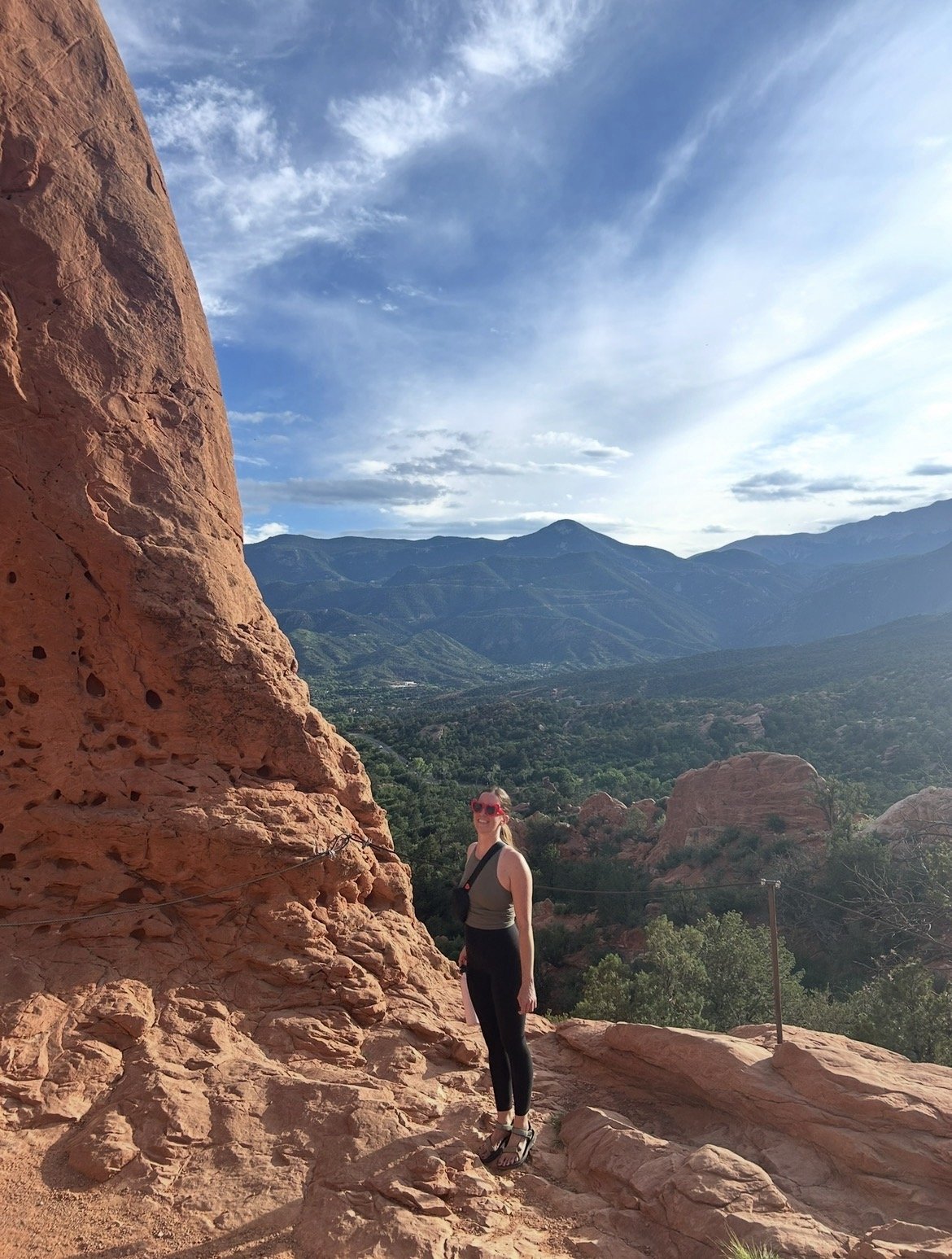
Heat tolerance remains something we are actively working on, and Lauren isn’t suddenly invulnerable to a Texas summer, but the difference between where she started and where she is now matters. Someone who had reached the point where relatively mild temperatures could create serious problems has gradually rebuilt enough tolerance that moderate walks in temperatures in the 90s have become possible again. To me, that represents something much larger than whether Lauren can walk outside when the thermometer says 92 instead of 72, because early in our work so much of the focus was simply trying to understand why her body kept breaking down and finding ways to make her life more stable. As that stability improved, the question could slowly change from “How do we keep this from going wrong?” toward “What can we help Lauren become capable of again?”
That is where the climbing pictures matter so much to me. Lauren didn’t come to me because her life’s ambition was to produce better health data; she wanted her life back. She wanted to be able to work, sleep, exercise, go outside in Texas, climb, skate and do the things that had always made her feel like herself without constantly wondering whether the price would be several days in bed afterward.
I also want to be very clear about what this story is not. Lauren has a serious cardiac history and a pacemaker, and I have never tried to replace her physicians or position exercise, nutrition or lifestyle changes as substitutes for medical care that she needs. Medication can be essential, specialists can be essential, and medical testing can be essential. My work occupies a different space that often becomes very important after someone leaves the doctor’s office with good medical information but still has to figure out how to live the other 8,700 or so hours of the year.
That is where I spend a great deal of my time. Research tells us what may work, medical professionals can tell us what needs medical attention and technology can give us increasingly detailed information about what is happening, but none of those things by themselves tell us exactly how one individual should integrate all of that into their real life. My job is to understand the person and their goals, evaluate the information that actually matters, use current research to help inform the direction, and then translate all of that into a clear, structured plan that the person can actually follow in day-to-day life—much like a doctor writing a prescription with a specific medication and dosage, except here it might be training, recovery, nutrition or lifestyle actions instead of pills. Then I watch what happens and continue adjusting as the person and their circumstances change.
Sometimes that means the priority is recovery, sometimes we are rebuilding something that has been lost, sometimes we are trying to prevent another problem from developing, and sometimes the person is ready to push performance. Those aren’t necessarily four different programs to me; they can be different places the same person moves through as their life and body change.
Lauren said, “I think that was the biggest gift Sean gave me, to be honest. He gave me hope and something else to try when I felt like all the doors were closed and I should just accept that my life was never going to get better.”
I am proud of the progress Lauren has made, but I don’t see this as a finished before-and-after story where everything is fixed and we roll the credits. There are still things we are working on, heat tolerance among them, and there will almost certainly be other questions that show up as her goals and life change. What is different now is that we have a much better understanding of Lauren, a growing history of how her body responds and a process for continuing to learn rather than starting over every time something changes.
When I look at the photograph of Lauren climbing beside the river, I don’t see a heart-rate chart, a glucose graph or a training program. I see someone outside doing something that matters to her, in a beautiful place, using a body that for several years had made her wonder whether that part of her life was disappearing, and that is ultimately why any of this matters to me. Health isn’t valuable because the numbers look good on a dashboard, and longevity isn’t valuable simply because someone adds years to a calendar. The point is having enough health, strength and capacity to keep doing the things that make those years worth having, whether that means climbing beside a river, hiking across a glacier with someone you love, riding a bike, traveling with your family or simply being able to walk outside on a hot summer evening without being afraid of what your body is going to do afterward.
Lauren’s story is still being written, which may be my favorite part of it. A few years ago she was lying on her couch wondering what else there was left to try, and now we get to ask a very different question:
What do you want your body to be capable of next?