
Most training plans don’t fail in dramatic ways.
They fail quietly.
Someone starts a program with good intentions. The workouts look solid on paper. The structure makes sense.
But real life doesn’t follow a spreadsheet.
Energy fluctuates. Stress shows up. Sleep changes. Small imbalances appear that the original plan never accounted for.
Eventually the plan stops fitting the person.
That’s exactly the problem this project is meant to explore.
Instead of forcing someone to follow a rigid program, the goal here is to watch how training actually unfolds and adjust based on what we learn along the way.
The first week of training with Lathan already revealed several useful patterns.
The Person Behind the Project
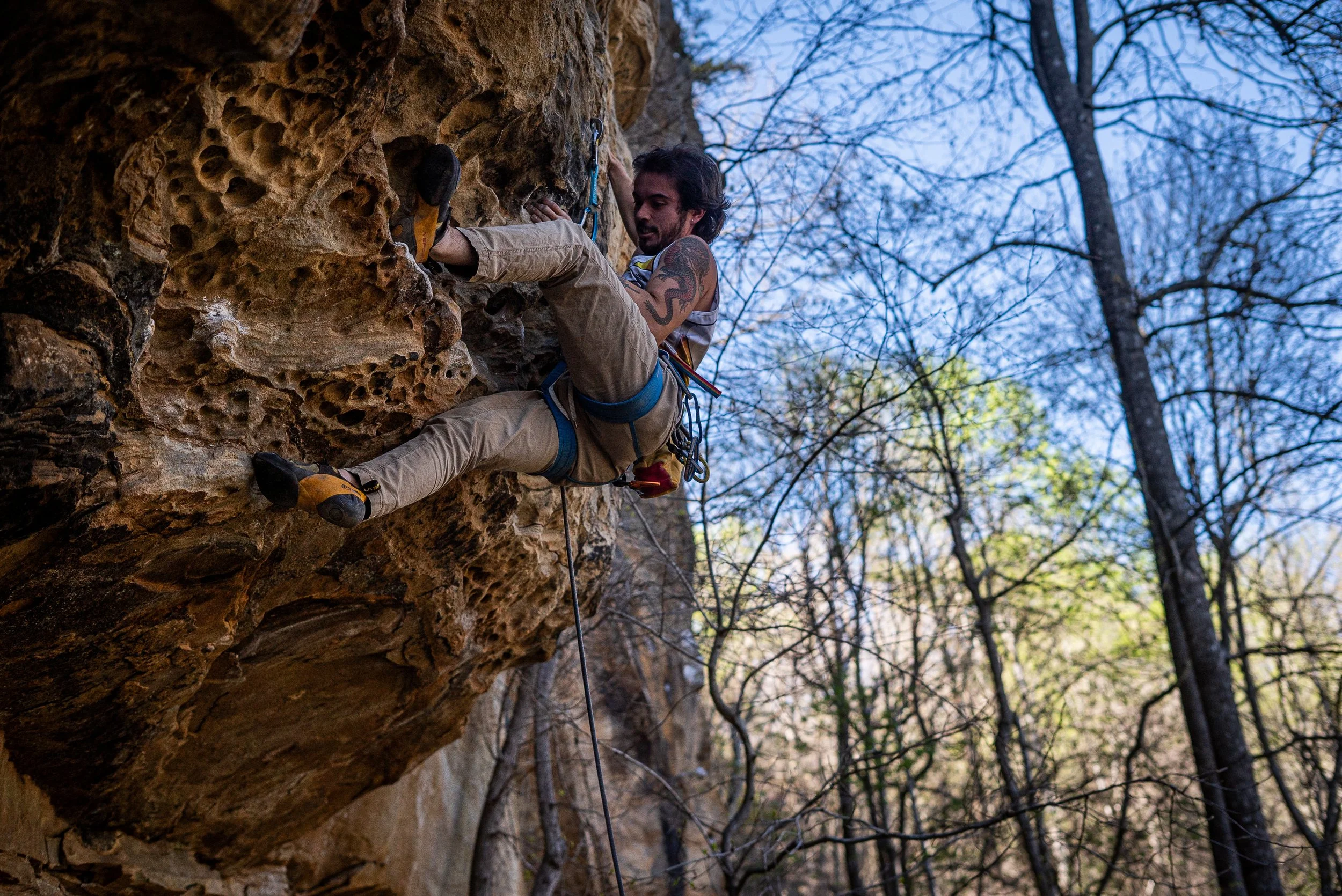
Lathan has been climbing for nearly a decade and has a long-term goal of climbing 5.14a.
But the real reason I wanted to document this project isn’t the climbing grade.
It’s the process.
The same principles that apply to someone trying to climb a harder route also apply to someone trying to lower blood pressure, rebuild strength after an injury, or simply stay capable as they get older.
Anyone training for a meaningful goal eventually runs into the same reality:
The body doesn’t progress in a straight line.
That’s why this project focuses less on the exercises themselves and more on how the body responds to them.
A Small Detail That Revealed Something
During the first week, one of the workouts took a little over an hour and felt like about a 6–7 out of 10 in effort.
In training we often track something called RPE, which stands for Rate of Perceived Exertion.
It’s a simple scale from 1–10 describing how hard something feels.
1 would feel extremely easy.
10 would be a true maximum effort.
Using RPE helps us understand how demanding workouts actually feel in the real world, not just how they look on paper.
After finishing the programmed workout, Lathan added a little extra work:
• two sets of barbell rows
• two sets of hammer curls
That extended the session to about 90 minutes, and the effort rose to roughly 7 out of 10.
When he explained why, his answer was interesting.
He said that 1.5–2 hours in the gym tends to feel like a sweet spot for him, as long as he’s lifting or climbing.
At first glance this might sound like a minor detail.
But it reveals something important.
People who enjoy training often do the same thing:
when they feel good, they add more.
Sometimes that works in the short term. But over time it can quietly accumulate fatigue if it isn’t managed carefully.
Catching patterns like this early is one of the main reasons adaptive training systems exist.
Another Pattern Appeared
The week also revealed something interesting about Lathan’s pulling strength.
He recently performed a two-rep max weighted pull-up with 45 pounds added.
That’s a strong number.
But when the weight dropped to around 75% of that load, his reps fell off faster than expected.
For example:
• +35 pounds felt like about a 9/10 effort at five reps
• +25 pounds felt like about an 8/10 effort at five reps
In simple terms, his maximum pulling strength is very strong, but his ability to repeat that strength multiple times is less developed.
That actually makes sense when you look at how he’s trained in the past.
Most of his pull-up work has focused on very heavy sets with low reps, usually in the 3–6 rep range.
That style of training builds excellent peak strength, but it doesn’t always build the same level of strength endurance.
I see this fairly often in people who train primarily for maximal strength.
And for climbing—and really for many physical goals—both qualities matter.
Recognizing that balance early helps guide how future training blocks evolve.
Why These Early Signals Matter
None of these observations mean something is wrong.
They’re actually exactly the kind of signals we hope to see.
The purpose of adaptive training isn’t simply to deliver workouts.
It’s to watch how someone interacts with those workouts and learn from the patterns that appear.
In just the first week, a few important signals already showed up:
• When training feels good, Lathan tends to extend sessions.
• His pulling strength is very strong at the top end but drops faster when reps increase.
• His feedback about effort is detailed and consistent, which makes tracking much more useful.
A traditional training plan would simply move on to the next week.
An adaptive system treats these signals as information.
How These Signals Shape the Next Weeks
Those early signals help guide what happens next.
If someone consistently adds extra work when they feel good, the program needs clear guardrails so progress doesn’t quietly turn into accumulated fatigue.
If someone’s strength profile shows strong peak force but weaker repeat strength, future blocks can include work that gradually improve that balance.
And as more weeks accumulate, the patterns become clearer.
Week by week we begin learning things like:
• how recovery fluctuates
• how different workouts affect fatigue
• how strength responds to training stress
• how quickly the body adapts
Each week adds another layer of information.
The signals we see now help guide the next few weeks, and those weeks eventually shape the phases that follow.
Instead of guessing what someone might need months from now, the system gradually learns what actually works for that person.
The Bigger Idea
The long-term goal of this project isn’t just to help someone climb a harder route.
It’s to demonstrate how training can adapt to real people with real goals.
Whether someone is trying to climb 5.14, improve their strength in their 40s, rebuild their health after years of inactivity, or simply stay capable as they age, the principle is the same.
Progress rarely comes from forcing the body through a rigid plan.
It comes from paying attention to the signals that appear along the way and adjusting accordingly.
The first week of training already showed something important:
When you look closely enough, even a single week can reveal patterns that a static training plan might never notice.
And those small signals are often where meaningful progress begins.
Makes you wonder how many people feel stuck in a plan that never changes.