
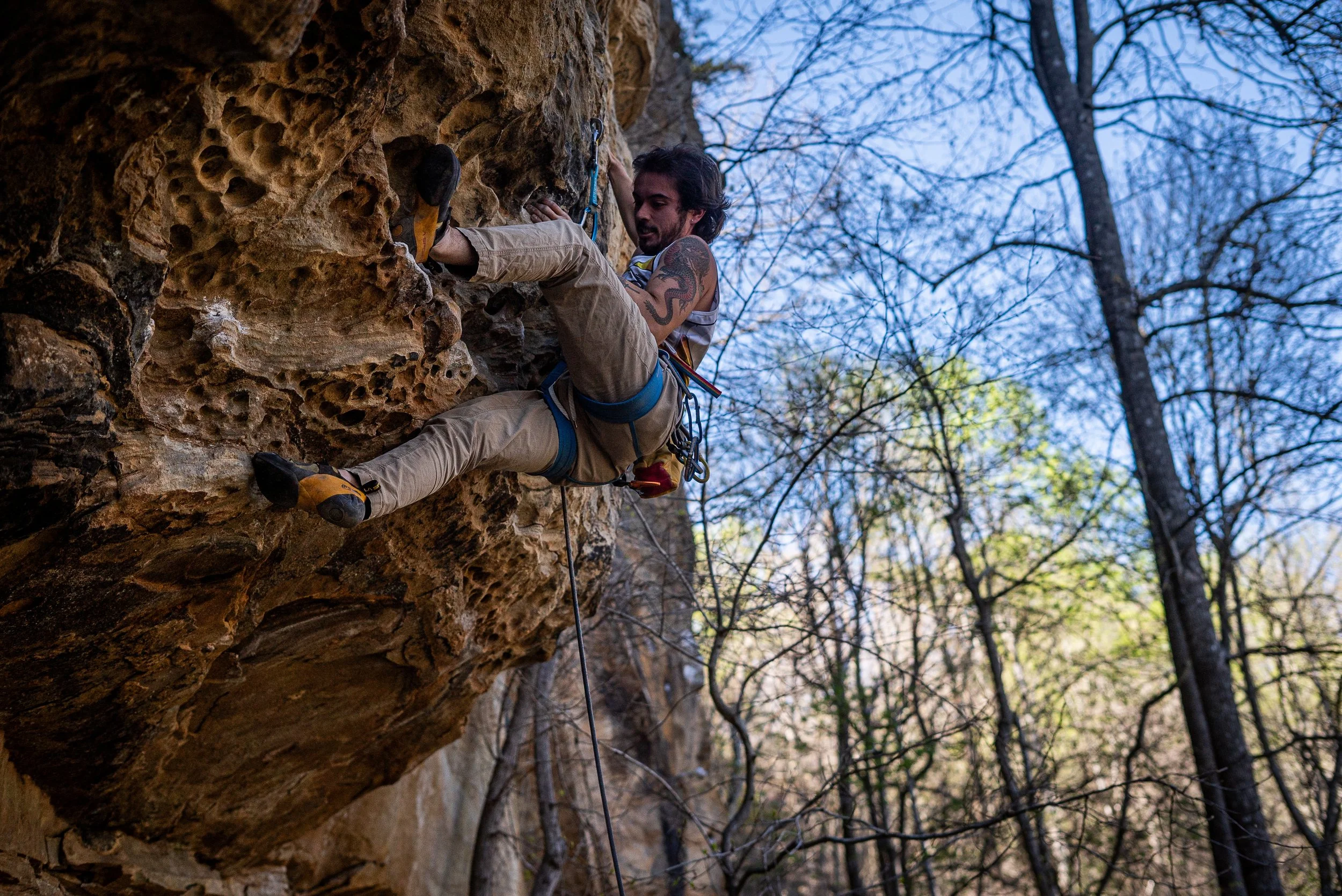
THE PLATEAU PROBLEM: HOW ONE CLIMBER IS TRYING TO BREAK PAST 12+
Most training plans don’t fail right away.
For a few weeks, everything feels great. Progress is happening. Motivation is high. Then, something subtle starts to change.
Fatigue builds. Life interferes. Recovery fluctuates. Small aches start to show up. The plan keeps going exactly as written, but the body is no longer responding the way the plan expected.
That’s where many climbers quietly get stuck.
THE CLIMBER
Lathan has been climbing for nearly a decade. He climbs in the 12+ range and has bouldered indoors around the V5–V7 range. Like many experienced climbers, he has spent years experimenting with different training approaches and writing his own plans.
His long-term goal is clear: Climb 5.14a.
The challenge at this stage isn’t motivation. Lathan trains consistently and has a strong base of climbing experience. The challenge is finding the specific bottlenecks that are getting in the way.
THE INITIAL ASSESSMENT
When we looked at his training history and physical testing, several patterns became clear. The biggest opportunities for improvement were:
Finger strength
Pulling strength
Core tension
Hip mobility and stability
One interesting factor showed up during the mobility testing. As a child, Lathan had Legg–Calvé–Perthes disease affecting his right hip. That left him with limited external rotation on that side. Traditional stretching tends to irritate the joint, so improvements there will come mostly from strength and control rather than passive flexibility work.
None of these limitations are unusual. In fact, they’re exactly the kinds of bottlenecks that tend to slow down experienced climbers.
A COMMON TRAINING PATTERN
Another thing became clear during the assessment. Lathan is capable of pushing very hard.
That’s a good trait to have, but it also creates a common pattern: When motivation is high, intensity tends to keep creeping upward. Eventually, fingers or elbows start getting irritated, recovery becomes inconsistent, and progress slows down.
Static training plans rarely adjust when this happens. They assume the body will be ready for the same workload every week.
THE TRAINING STRUCTURE
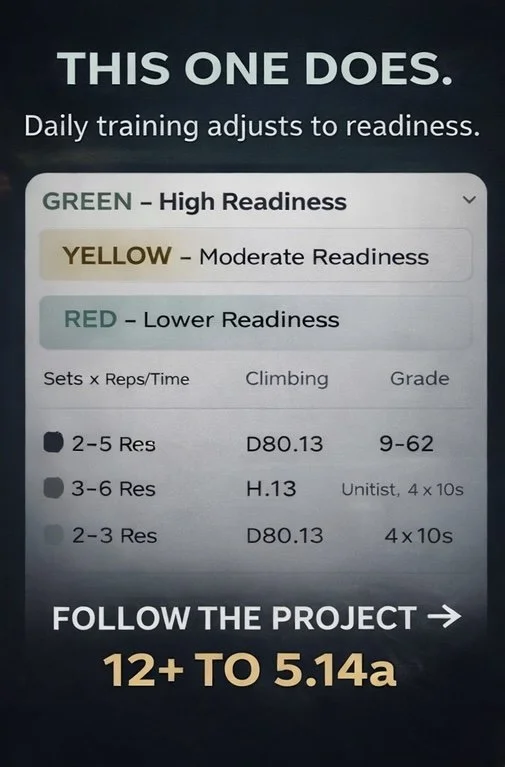
Instead of following a rigid weekly schedule, Lathan’s plan uses a structured decision system. Each training day already has three possible versions of the workout written into the plan:
Green – High readiness
Yellow – Moderate readiness
Red – Lower readiness
When Lathan wakes up, we already have the data from his wearable device. Before training, he answers a few short questions about how he feels—simple number selections related to fatigue, soreness, and readiness.
Using that information, the system selects the appropriate version of that day’s workout. Once the decision is made, the workout appears in full detail: sets, reps, weights, rest periods, and recommended climbing intensity.
The goal is simple: remove the guesswork so the climber can focus on the work.
WHAT THIS PHASE FOCUSES ON
The current phase of training focuses on building the physical capacities most likely to raise Lathan’s climbing ceiling:
Finger strength
Pulling strength
Core tension
Hip stability and controlled mobility
Aerobic recovery capacity
Climbing remains part of the program, but this phase is primarily about building the physical engine that supports harder climbing later.
GUARDRAILS FOR LONG-TERM PROGRESS
Climbing performance depends heavily on connective tissue adaptation. Because of that, the system includes guardrails designed to prevent the cycles of overtraining and irritation that many climbers run into.
Load Caps: Training loads are capped so progression doesn’t jump too quickly.
Built-in Deloads: Recovery periods are baked into the structure.
Pain Thresholds: Training stress automatically adjusts when something doesn't feel right.
If a session clearly isn’t going well—excessive fatigue, poor movement quality, or rising pain—the system includes clear rules for stopping early. The goal isn't just to push harder; it's to keep progress moving forward without breaking the body.
STARTING WITH A PHASE
A lot of people assume a system like this requires a long-term coaching commitment. It doesn’t.
I usually have people start with a defined phase—often a 6–12 week block built around a specific goal. After that phase ends, they can decide whether to stop, adjust the goal, or continue with another phase.
The system adapts to the goal.
WHAT HAPPENS NEXT
The first ramp weeks of this project will establish the baseline. They will show how Lathan responds to different training stresses and which types of sessions produce the strongest results.
From there, the plan will evolve. Training loads will adjust. Exercises may change. The real work actually starts once the feedback begins coming in.
Because the most interesting question now isn’t what the plan looks like today. It’s whether this system can actually move a climber from 12+ toward 5.14a—and whether it works the way we think it will.