
In the first part, I talked about the moment I stepped away from the pre-med path.
I didn’t expect things to start making more sense so quickly after that. After taking one kinesiology class, I signed up for a few more the next semester. Then a few more. Eventually, I decided to switch my major from Biology to Kinesiology.
At the time, it didn’t feel like a massive turning point. It just felt like I was leaning into something that finally started to make sense.
Around then, a friend convinced me to join a triathlon class. I didn’t think much of it going in, but it ended up being one of those classes that stayed with me. The instructor was a graduate student who talked about the work in a way that just stuck—how to pace ourselves, how to build toward a goal, and how to prepare for something most of us had never tried before.
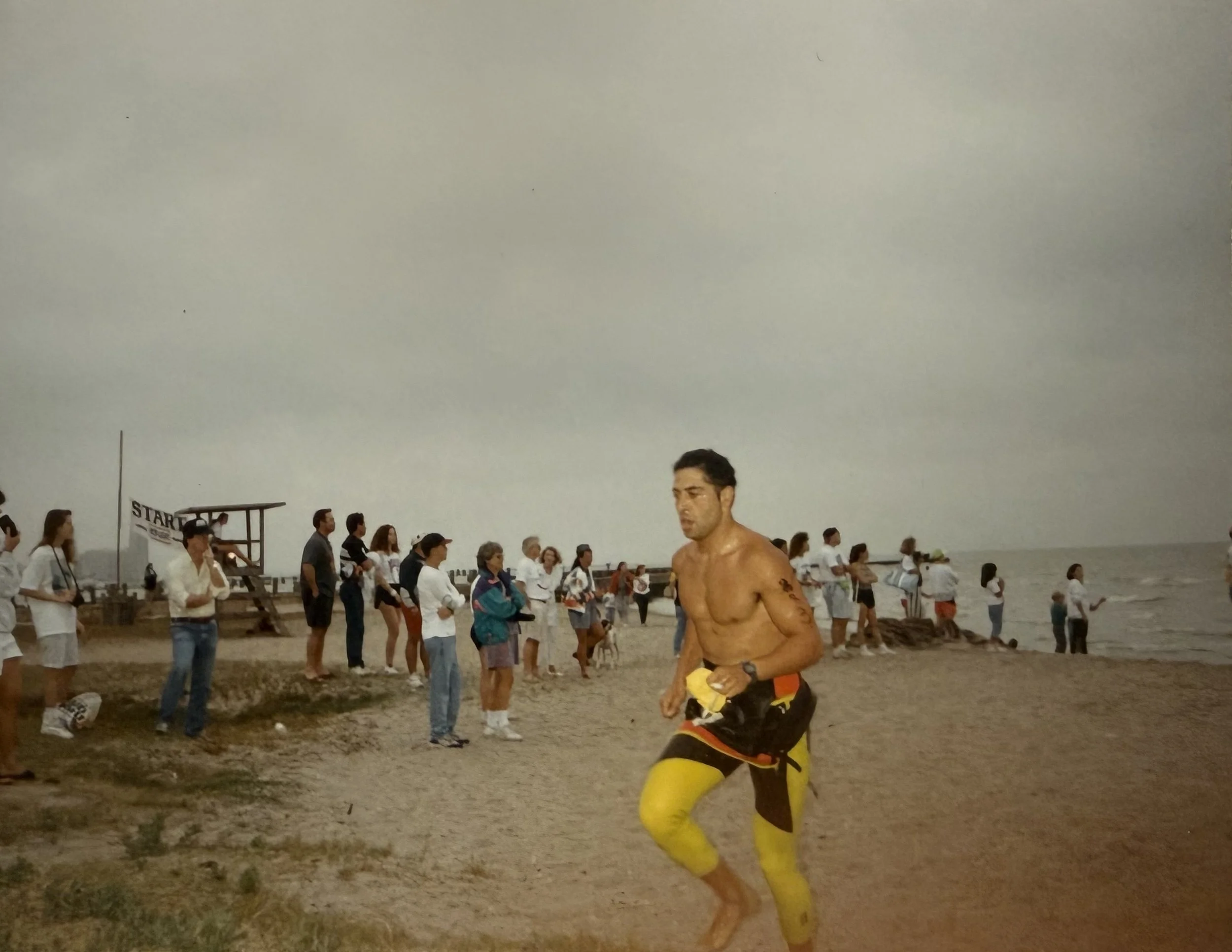
Back then, most people hadn’t really heard of triathlons. If you explained it to them, they usually thought the whole thing sounded a bit off.
But during that time, school started to feel different. It wasn’t just about grinding through the material anymore; I found myself actually wanting to understand it. Without really trying to “optimize” anything, the work got easier. Not because the subjects were simple, but because the pieces were starting to connect.
I also started noticing changes outside of the classroom. I wasn’t just reading about the body; I could feel a difference in how I was moving and recovering. For the first time, it felt like things were working together—not perfectly, but more consistently than before.
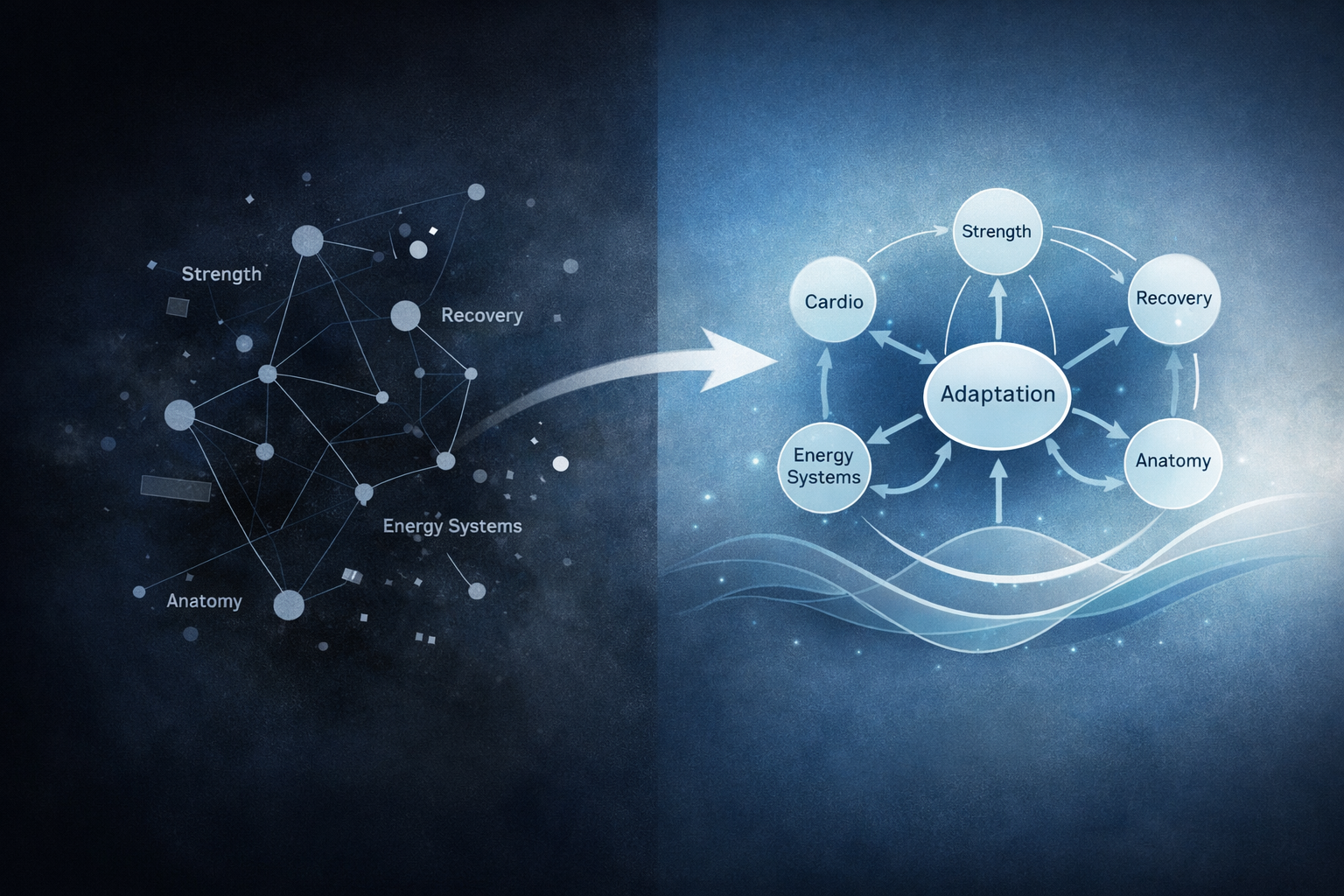
The classes gave me a bit of language for what I was experiencing. Anatomy started to connect to movement. Basic mechanics helped explain why some positions felt easier than others. Understanding energy systems gave me context for why some training days felt smooth and others didn’t.
Nothing felt groundbreaking on its own, but taken together, it changed how I looked at things. Strength, cardio, and recovery stopped feeling like separate buckets. They were all influencing the same system.
Over time, a simple idea started to stick: the body responds to what you give it. Not just the muscles, but everything. The heart, the brain, and the way we use energy all seem to adapt. Even things like consistency and recovery started to feel less like random luck and more like something that could be influenced. Not controlled, exactly, but shaped.
I began to feel like the body wasn’t this fragile thing that needed to be managed perfectly all the time. It felt like it could handle more if it was built up the right way—a bit more resilient and prepared for whatever showed up.
That idea stayed with me. It wasn’t a final conclusion, just something I kept coming back to. It started to change how I thought about training and what it means to actually feel good on a day-to-day basis.
It made me wonder if that same ability to adapt stays with us as we get older—
and what it might actually feel like to move through life with a system that’s still ready for whatever comes next.