Most people do not wake up at 40 suddenly unable to do what they love. The change can be quieter: a hike feels less certain, stairs take more effort, or you begin choosing trips around what your body might no longer handle. Over time, those small changes can add up to having to reduce or stop the activities you enjoy.
The stakes are real. A fall and broken hip can change someone’s independence abruptly. Loss of leg strength can make walking, stairs, and travel harder. In older women, faster loss of grip strength predicted later frailty and difficulty with daily tasks. Physical inactivity in midlife and social isolation in later life are also among the potentially modifiable risk factors identified by the 2024 Lancet Commission on dementia. This means strength, movement, and connection are worth protecting before they begin to disappear.
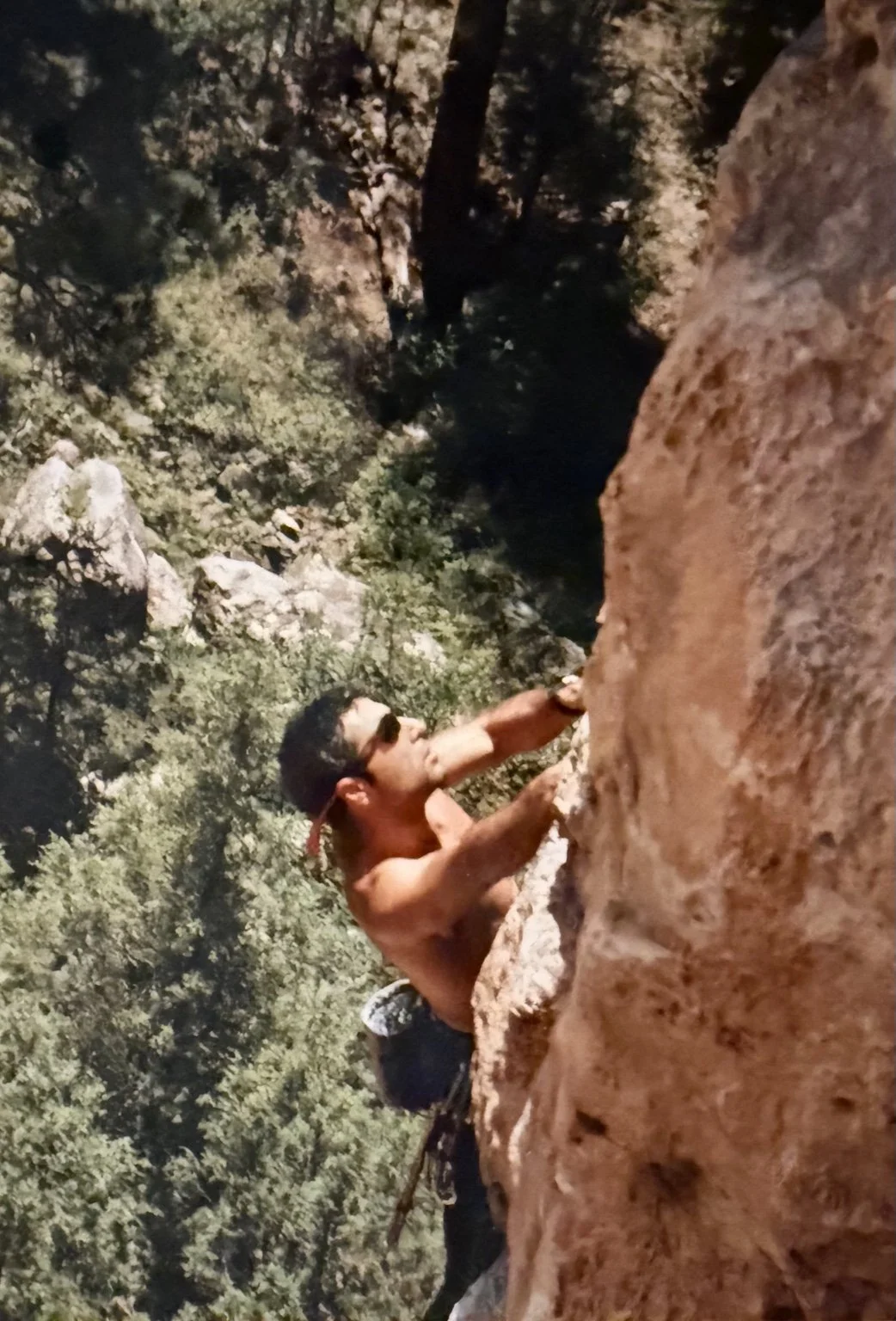
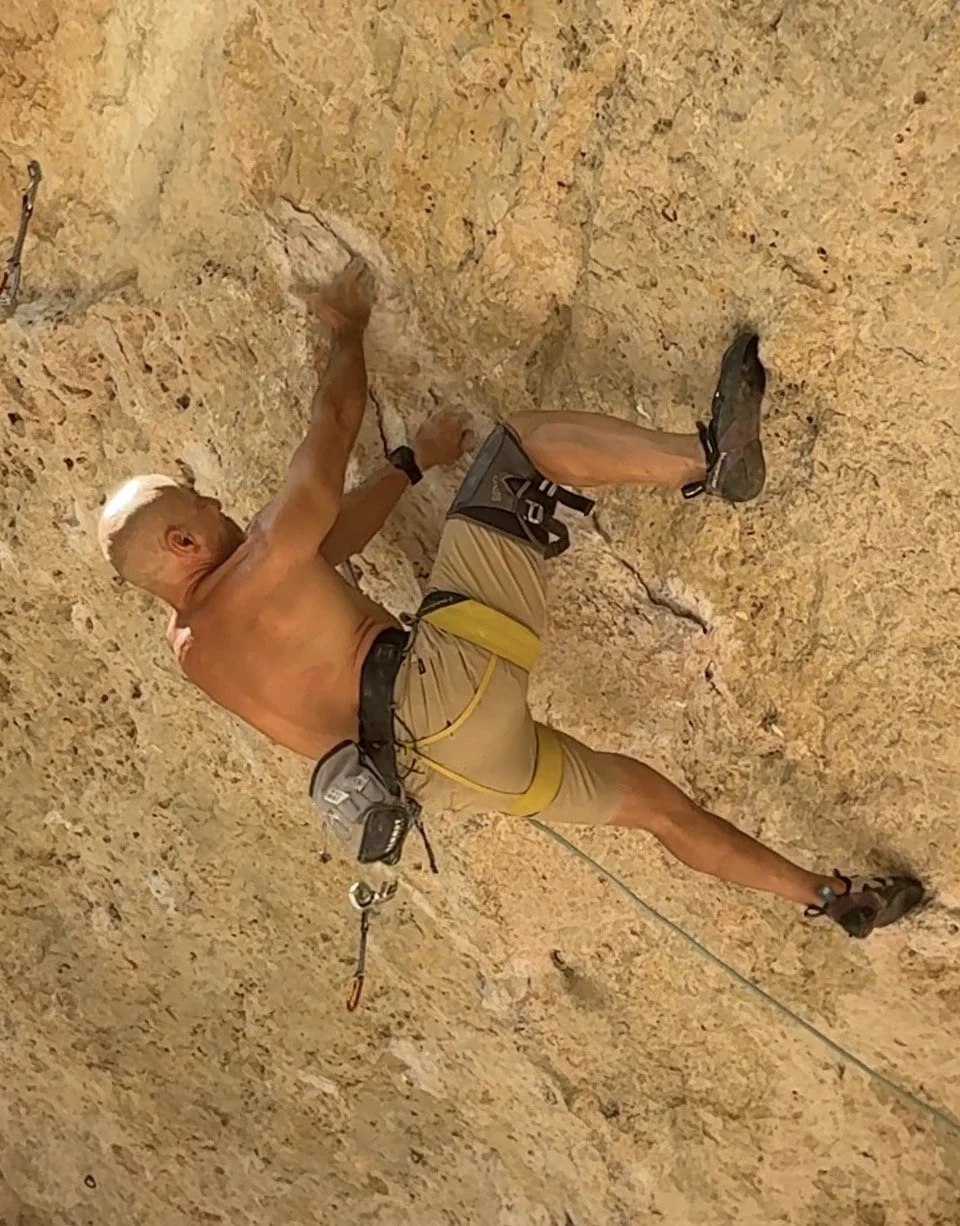
That is why climbing interests me. You find a foothold, shift your weight, reach, and sometimes stop to reconsider your approach. A suitable route can bring strength, balance, movement, attention, and time with other people into one activity. Could that combination make climbing an especially engaging addition to life after 40?
What has actually been tested?
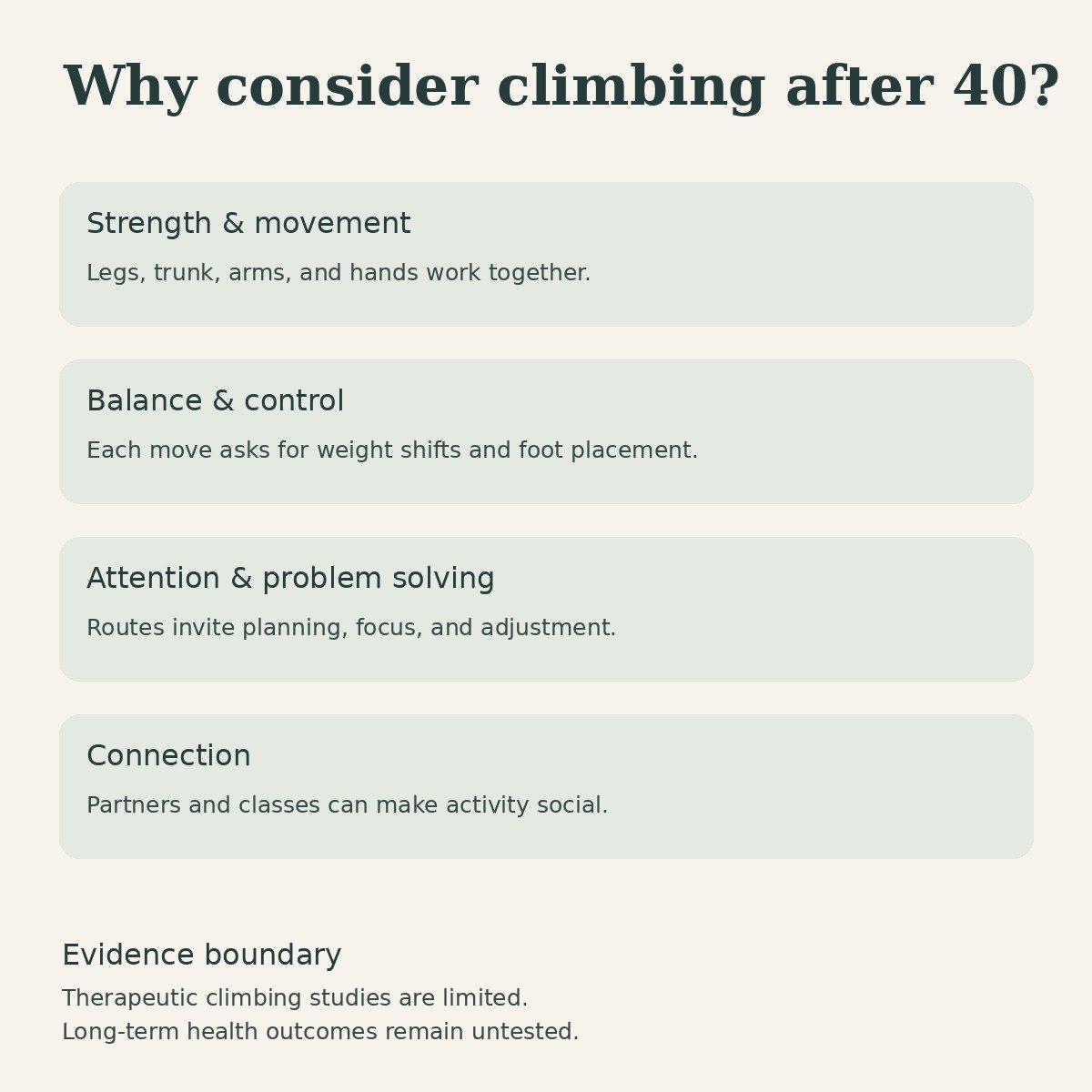
Climbing-specific health research is promising but limited. In a small trial of geriatric rehabilitation patients, a short program of supported climbing near the ground was compared with conventional physiotherapy. Some measures of mobility, balance, and daily function favored climbing. But the study had important weaknesses, and it cannot tell us what years of recreational climbing would do for healthy adults. A later review of 18 therapeutic-climbing trials involving 568 patients found a pooled improvement in physical outcomes. Climbing can be a useful physical task in some settings; its long-term effects on longevity have not been established.
So why consider it? Because the activity asks people to practice several capacities that matter beyond the wall—and because a person may be more likely to continue an activity they enjoy. That is a practical case to examine, not proof of a particular health outcome.
Strength and mobility with somewhere to go
Climbing asks your legs to push, your core to control your position, and your hands and arms to maintain contact. The movement has a purpose: get yourself to the next hold. I see value in that for someone who wants to keep climbing stairs, carrying luggage, or exploring uneven ground. But also, there is a puzzle-solving aspect and having to fully focus and be engaged that bring even more value. Each climb is different and requires different movement patterns to get to the top, and having to solve these puzzles has great cognitive benefits. The fact that you have to stay mentally engaged and deeply focused on each movement also has tremendous value whose benefits have been widely researched.
Grip strength is another important signal. In studies of older adults, weaker grip or faster grip decline has been associated with later frailty and other adverse outcomes. Climbing may give someone an enjoyable reason to use and develop grip strength.
Balance, falls, and confidence
The prospect of falling can make people avoid activities they once enjoyed. And a serious fall can change far more than a training schedule. In a Cochrane review of trials involving community-dwelling older adults, exercise programs reduced the rate of falls by about 23%. Programs emphasizing balance and functional movement were particularly relevant. Climbing provides an engaging way to improve balance and functional movement.
A physical problem to solve—with other people around
A route also asks you to pay attention and plan. Sometimes the next move is obvious; sometimes you have to look again and try a different sequence. That challenge is part of climbing’s appeal to me.
Then there is the question of whether you want to return. A class, a regular partner, or familiar faces at the gym can make activity more enjoyable and create opportunities for connection. Social isolation is associated with serious health risks. The opportunity matters only if it becomes a real, continuing part of someone’s life.
Where would I start?
For an interested adult over 40, I would look for an introductory class with qualified instruction, an appropriate route, and a clear safety orientation. Start with manageable moves and generous rest. Pay attention to footwork and how your fingers, shoulders, and other joints respond; pain is a reason to change the task. The right format depends on the person’s balance, strength, injuries, bone health, and comfort with height. Someone with a significant limitation may need individual clinical advice before starting.
Climbing need not replace strength training, aerobic work, or a targeted balance program. Its appeal is the combination: physical effort, movement choices, problem-solving, and the possibility of shared experience. For someone who enjoys it and can participate safely, that may be a compelling way to keep practicing capacities that support performance and independence. The next question is personal: does climbing fit your life, and what changes as you keep doing it?