
Most health, performance, and longevity plans look solid on paper.
They’re structured, logical, and often research-backed. For a while, they work. Then real life shows up—and progress quietly starts to unravel.
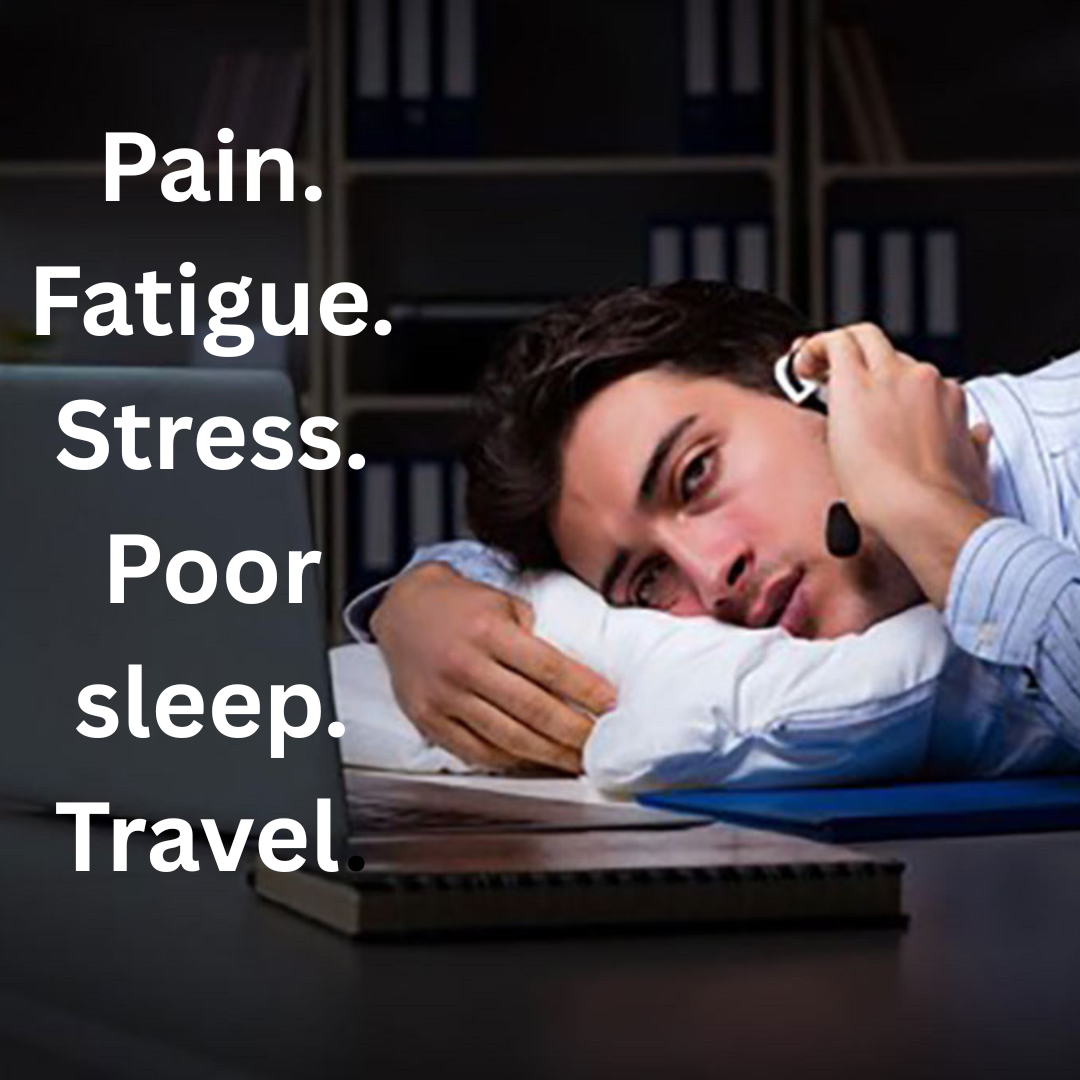
Most people don’t stall because they lack discipline. They stall because their plan assumes ideal conditions: good sleep, manageable stress, no pain, and predictable schedules. When those conditions disappear, the plan doesn’t adapt—and the work being done stops producing benefit.
The real failure doesn’t happen during training sessions.
It happens between them.
Where Plans Actually Break
Most plans are static. Human systems aren’t.
Your capacity changes daily based on sleep, workload, stress, and early pain signals. Crucially, the body doesn’t meaningfully distinguish between physical stress and mental stress. Both draw from the same recovery reserves.
When overall stress is high, recovery takes longer. In that state, adding more load doesn’t just fail to help—it often produces no short-term benefit and no long-term adaptation. The stimulus is absorbed as stress, not progress.
When that context isn’t accounted for, the plan starts working against the person following it.
How Failure Shows Up
Sometimes the breakdown is dramatic.
A sudden injury.
A sharp pain that forces complete shutdown.
A major performance drop that can’t be pushed through.
More often, it’s quiet.
Sessions start getting skipped.
Movements feel “off” more often.
Progress plateaus despite consistent effort.
Minor pain becomes a constant background presence.
These quiet failures are easy to dismiss. Over time, they accumulate—and that’s where most plans truly fail.
The Longevity Cost Of Static Thinking
Longevity isn’t a separate program layered on top of training. It’s the long-term result of how stress and recovery are managed over years.
Training hard when recovery is incomplete.
Repeating the same loads as performance subtly declines.
Backing off completely when discomfort appears instead of adjusting intelligently.
Static plans don’t fail loudly.
They fail by accumulating stress faster than the body can adapt.
What Actually Works
Health, performance, rehab, prehab, and longevity aren’t separate tracks. They’re decision states within the same system.
The work needs to shift based on context. Sometimes that means intensity. Other times it means technique, mobility, circulation, or recovery work that still supports adaptation instead of adding more stress.
In this model, the plan isn’t a script.
It’s a framework.
Progress depends on responding on time and responding appropriately—before missed sessions, pain, or performance drops force the issue.
Judgement Still Matters
Structure and data can help, but they don’t replace judgment.
A hard session at the wrong time doesn’t build resilience.
A lighter session at the right time often does.
Plans fail when they treat stress as something to push through instead of something to manage intelligently.
The Reframe
Health, performance, and longevity aren’t built in your best weeks — they’re built by the decisions you make in your hardest ones.
When stress is high.
When recovery is slower.
When something feels slightly off.
When life doesn’t cooperate.
If a plan only works when conditions are perfect, it isn’t robust enough to support long-term progress.
Real progress lives between sessions.
That’s where the decisions that matter most are made.