
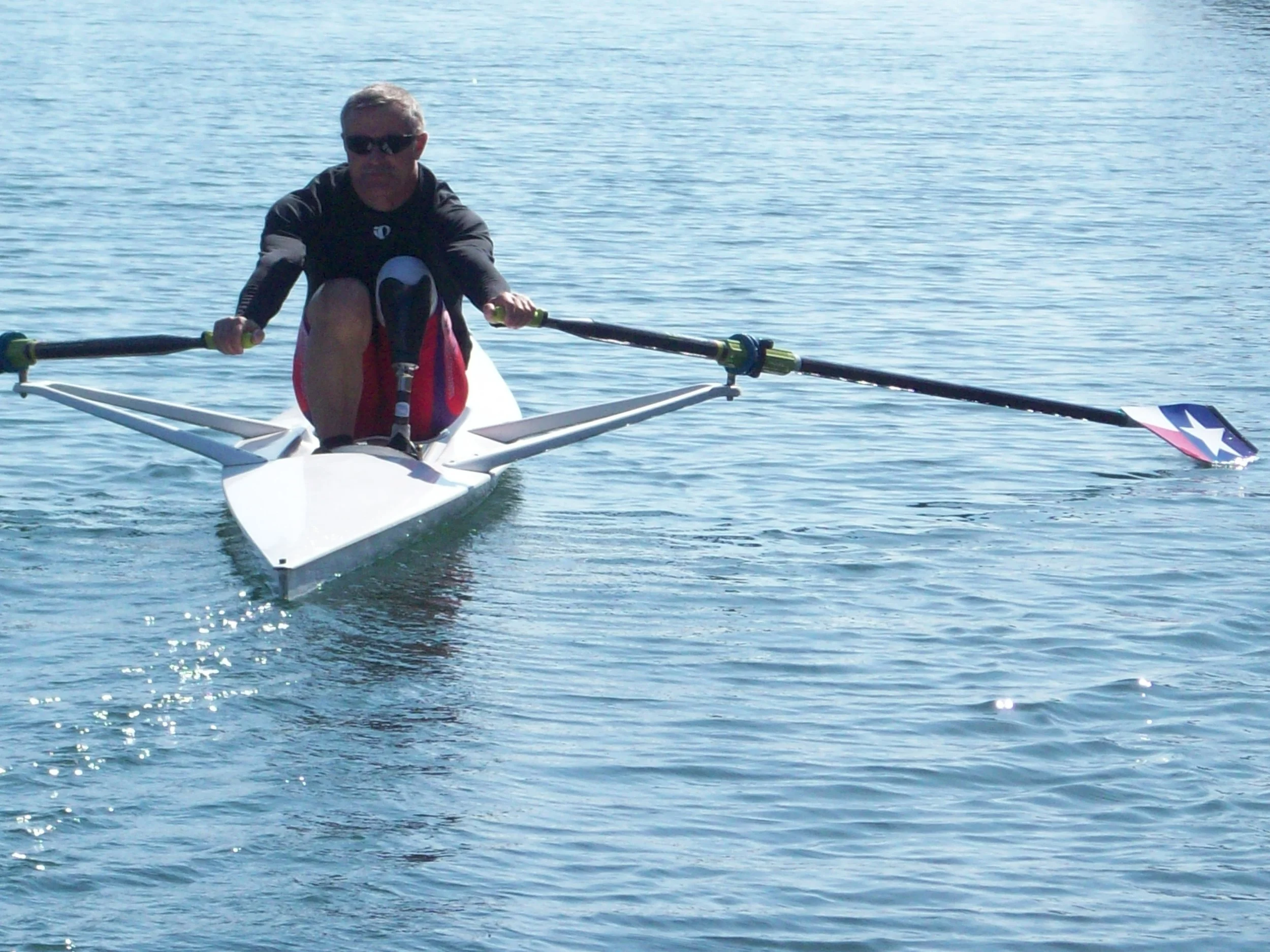
Greg in his element, testing the design on his custom prosthetic and getting data.
About ten years after college, I had already spent a lot of time coaching, learning, testing, and applying what I had learned from kinesiology across different sports, and it was working in a way that felt very real to me. I wasn’t someone who grew up naturally athletic, so being able to take these principles, apply them, and actually hit targets with pretty good precision meant something different. It wasn’t just theories I had studied, it was something I had worked through, tested on myself, and then applied to other people in completely different situations and still saw it work. Different sports, different goals, different starting points, and yet the process held up. There was a feeling that came with that, like things were starting to click in a deeper way. Not just understanding how the body works, but understanding how to take that and shape it around someone in a way that made sense to them. I could see it in the outcomes, I understood what someone was trying to achieve, I could build something around them that would actually get them there.
That was always the goal from the beginning. Learn what someone was trying to achieve, and build something around them that would not only get them there, but something they would actually want to do. The art of applying the science in a way that made sense to the person in front of you, whether that was a junior athlete older athlete, and everything in between.
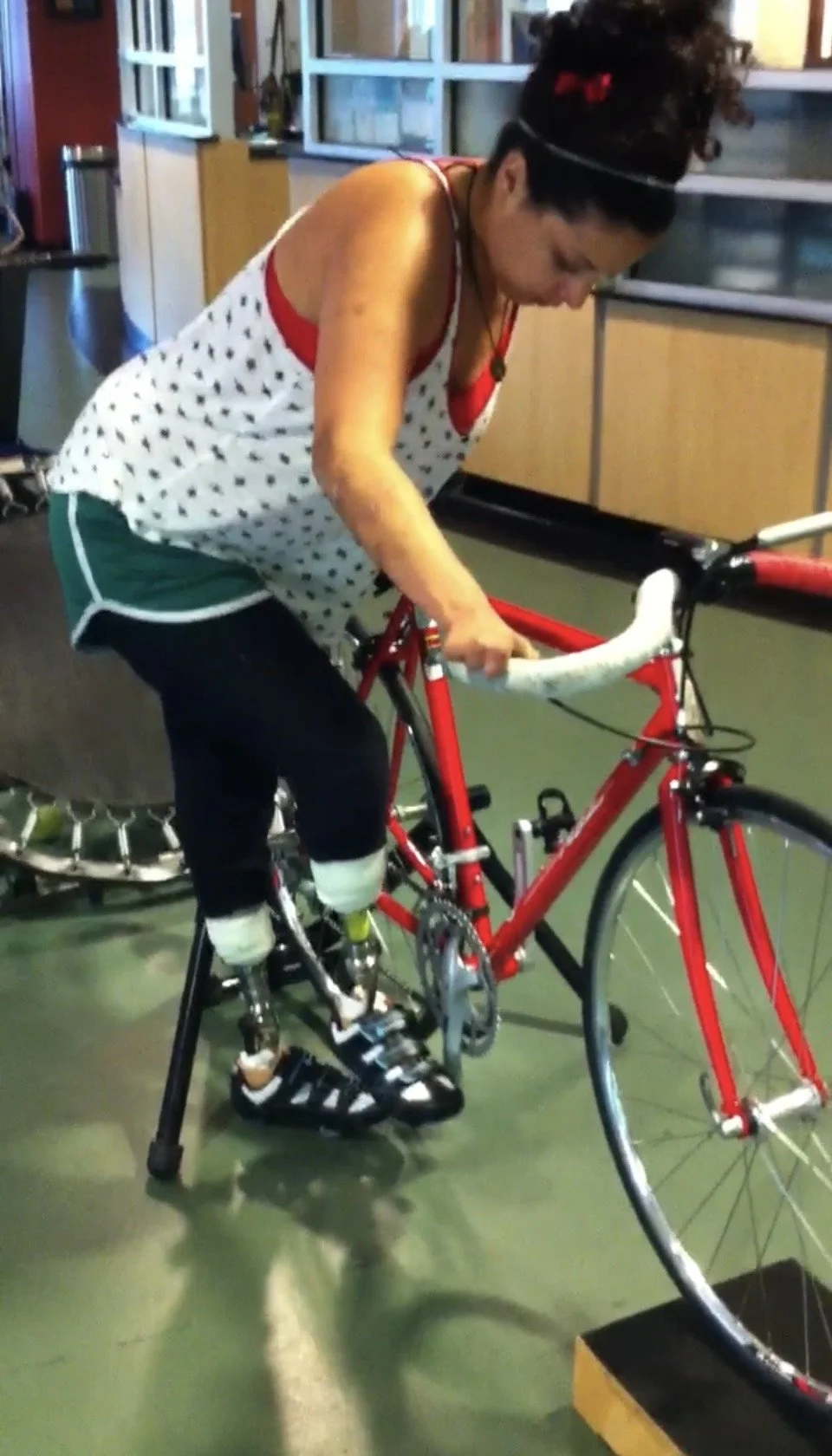
Jamie learning to mount/dismount and how to use her custom handlebar set up.
That's when I met Greg. Greg was my first adaptive athlete who would teach me a lot of lessons through the years. When I first met him something stood out to me right away, his determination, and his sense of curiosity. Greg raced bikes at a national level with impressive results and trained and competed at a national level in rowing, and if anything his amputation didn’t limit him, it helped him focus on solutions. We quickly started discussing ideas, and those conversations turned into a constant back and forth where I would bring something I thought might work, he would give very detailed feedback based on what he was actually feeling and experiencing, and that feedback allowed us to refine the exercise itself and even start thinking about what changes we could make to his prosthetic to maximize his power output. We would keep testing and adjusting until we saw results and then move on to the next problem. He would gain power, gain speed, and the results would follow. And along the way, without ever making it feel like a lesson, he was introducing me to a way of thinking that ended up changing everything for me and pushed me further than anything else at that point in my career.
To not just accept what was written or what was supposed to work, but to look closer, stay curious, pay attention to patterns, and come up with ideas, test them, and then come back and figure out what actually happened.
Greg was also the one who introduced me to Jamie and Carlos, both amazing adaptive athletes with their own amazing stories. That’s when things really started to fall in place.
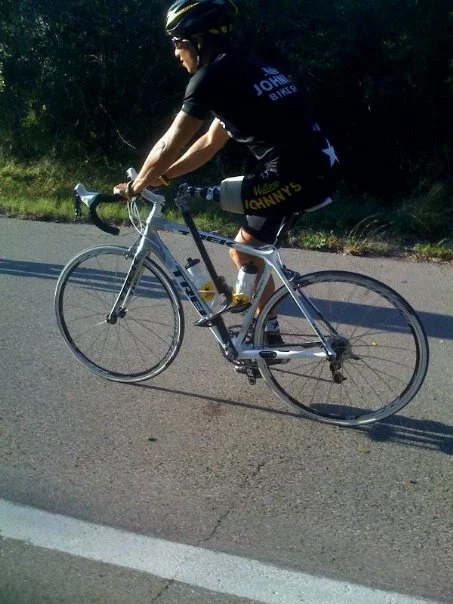
Carlos training for 100 mile ride in Colorado mountains.
Through those introductions, I was able to step into experiences that pushed everything I had learned even further. To share the joy of personal achievement and breaking through limitations right in front of me, to become a part of it. Their goal, their will power, their persistence, and the desire to push the boundaries and see what could be on the other side of it. An experience that I will always be grateful for, and none of that would have happened the way it did without Greg.
We stated working together before I had kids, up until cancer took too much of his body, and shortly before...
The way he approached problems. The way he looked at training. The way he refused to just follow status quo. That process—observing, questioning, research, testing, adjusting, works. It works very well and it can work with your goals, your timeline, your equipment, where you live and hopefully be enjoyable and adapt to your changes.
Looking back, that period was a big turning point.