
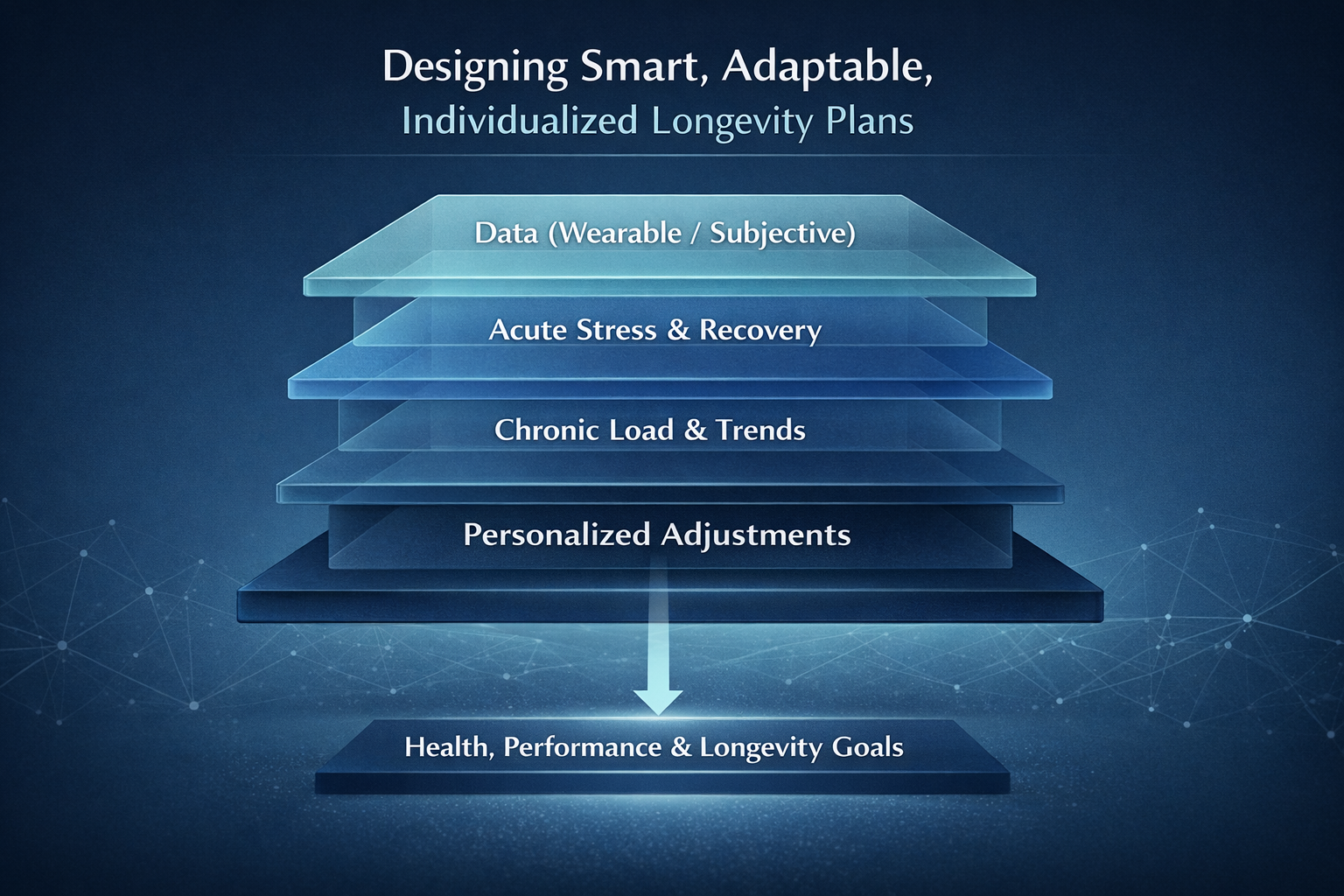
Smart longevity planning isn’t about doing more — it’s about placing the right stress at the right time.
Acute vs Chronic Stress: Where Most Longevity Plans Quietly Break
Last week I wrote about why wearable data and blood work often fail to improve outcomes — not because the data is bad, but because it doesn’t change daily decisions.
This is the most common place where that failure shows up:
Stress.
Not just training stress —total stress.
Most people don’t understand what stress actually is, how it accumulates, or why the same workout can either build health or slowly break it down depending on context.
Acute Stress vs Chronic Stress: The Missing Distinction
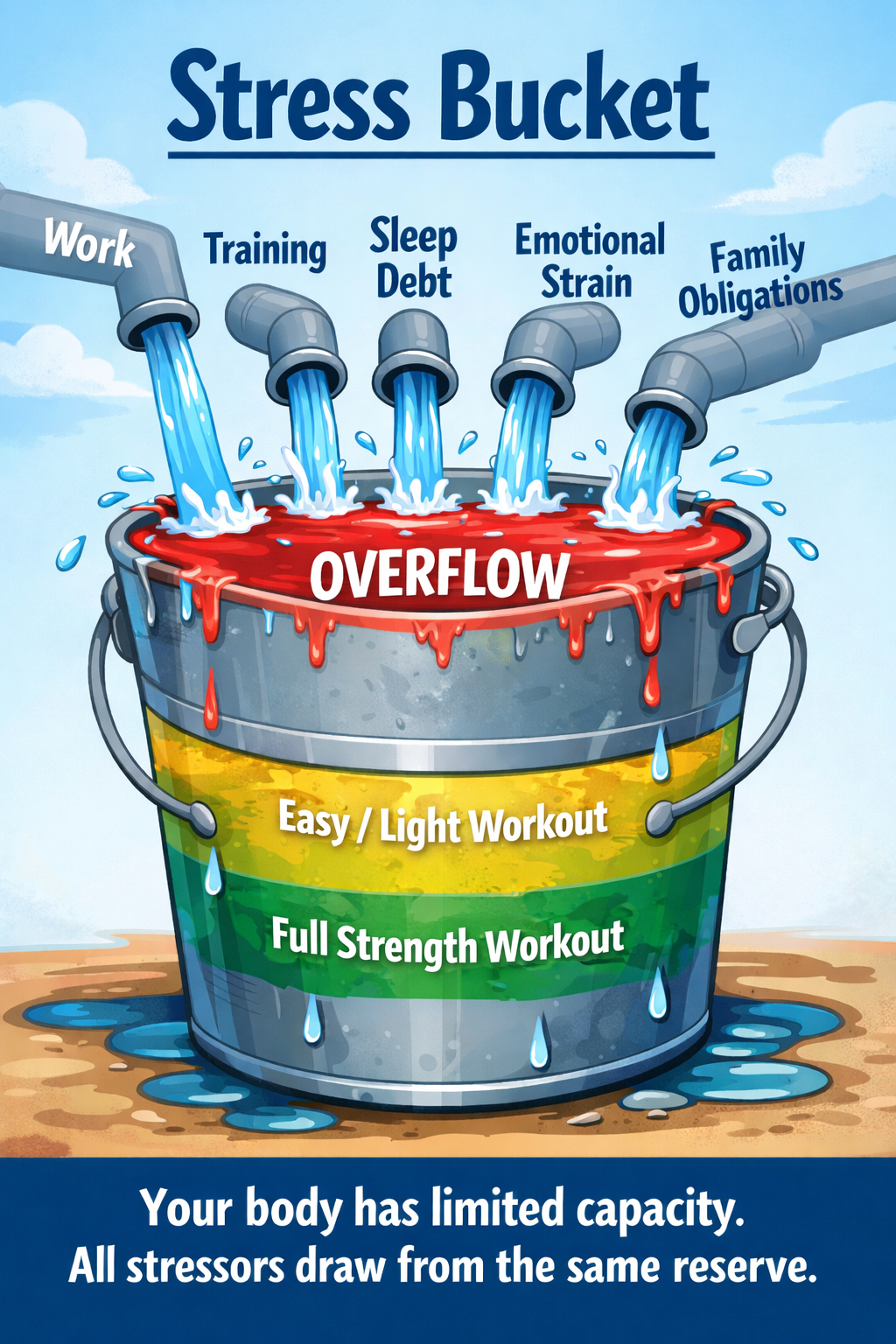
A simple way to understand the difference:
- Acute stress reflects the last 2–3 days.
- Chronic stress reflects a rolling average of weeks or longer.
That distinction matters more than most training variables.
Acute stress is:
- Short-lived
- Followed by recovery
- Necessary for adaptation
Examples people recognize:
- A hard workout after good sleep
- A short work deadline
- A brief disruption that resolves
When it’s absorbed properly, acute stress builds capacity.
Chronic stress is:
- Persistent
- Often invisible
- Frequently normalized
Examples:
- Ongoing work pressure
- Family strain or caregiving
- Emotional stress or unresolved grief
- Repeated poor sleep
- Training hard “because it’s on the plan”
Chronic stress rarely feels dramatic.
It feels like life.
The body doesn’t make that distinction.
Stress Is Additive — This Is Where Most People Go Wrong
They evaluate workouts in isolation.
A moderate workout on a calm, well-rested day is a positive stress.
That same workout, layered on top of:
- Poor sleep
- Emotional strain
- Cognitive overload
- Low energy or under-fueling
becomes a negative stress.
Same workout.
Very different cost.
Most people sense something is off — they feel tired, flat, or unmotivated — but they don’t understand why.
So they push anyway.
Why “Training While Tired” Backfires
This isn’t about avoiding hard training.
It’s about placing stress where it can be absorbed.
When total stress is already high:
- Recovery slows
- Adaptation stalls
- Injury risk rises
- Performance plateaus
- Metabolic and cognitive health degrade
People then ask:
“I’m consistent. I’m disciplined. Why am I not improving?”
Because the system is overloaded — not undertrained.
The body doesn’t care whether stress comes from:
- Work
- Family
- Sleep loss
- Emotional strain
- Training
It only responds to total load versus available capacity.
Why This Matters for Health, Performance, and Longevity
This isn’t just a performance issue.
When chronic stress goes unrecognized:
- Inflammation stays elevated
- Hormonal signaling degrades
- Injury becomes more likely
- Long-term disease risk accumulates quietly
Longevity doesn’t fail from one bad workout.
It fails from weeks and months of small decisions made under chronic stress.
That’s why early adjustment matters.
Bringing It All Together
This is exactly why measuring the right data matters.
Not more data — but data that helps distinguish:
- Recent stress (acute)
- Accumulated load (chronic)
- And the subjective signals the body gives before problems show up in numbers
When those inputs are combined correctly, the goal is simple:
to place the right workout at the right time.
That’s how plans adapt:
- To address current or acute health concerns
- To improve performance when capacity is available
- To keep making progress toward athletic or non-athletic goals
- And to protect long-term health and longevity at the same time
This isn’t about avoiding stress — it’s about using stress intelligently within a smart, continuously adapting program that supports health, performance, and longevity at the same time.
Because the same exercise can either build resilience or quietly cause damage — and the difference is almost always context.
That’s why data without interpretation fails.
And why decisions that adapt early and continuously matter more than the plan itself.