
Everyone’s path to health and performance is different, and that sounds simple until you are actually trying to help someone build a real relationship with exercise. It is easy to look at someone and think they just need the right workout, the right motivation, the right schedule, or the right amount of pushing, but people are not that simple. Everyone brings their own history, confidence, fears, interests, energy, friction points, and way of seeing the world into training, and if the plan does not respect that, it usually does not last long enough to matter.
Over the years, working with different types of athletes and fitness enthusiasts has taught me that if you want training to really help someone, you have to understand the person in front of you. Dylan is a great example of that. He is 26 years old, and like a lot of people, exercise had never really become a natural part of his life. His parents had worked hard for years trying to help him find a way to make fitness fit, and eventually they decided to try something different. His dad found me, we talked, and not long after that I started working with Dylan.
When I first started with him, I was not completely sure how the process would unfold. I knew I could help him get stronger, and I knew I could build a plan, but I also knew that forcing a plan onto him was probably not going to work. The first goal was not a perfect workout. It was consistency. It was helping him show up, removing outside expectations of what exercise was supposed to look like, and letting the process start where Dylan actually was.
So at the beginning, I listened a lot. I listened to Dylan talk about himself, his work, his hobbies, and the way he sees different parts of the world. I asked questions and tried to understand what interested him, what frustrated him, what made sense to him, and what did not. Some days we talked more than we trained, some days the workout moved more slowly, and some days the most important thing was not the weight or the reps, but the fact that he was there, engaged, and willing to keep coming back.
Over time, I started to understand Dylan better. He is wicked smart, very funny, capable, self-aware, and much more tuned in than someone might realize if they were only trying to push him through a workout. He taught me a lot through our conversations, especially about what it’s like to be on the autism spectrum, and that is one of the things I love about coaching. I learn something from every client, whether it is Greg, Dylan, a junior mountain biker training for nationals, or someone trying to rebuild their health later in life. Every person teaches you something if you are willing to listen.
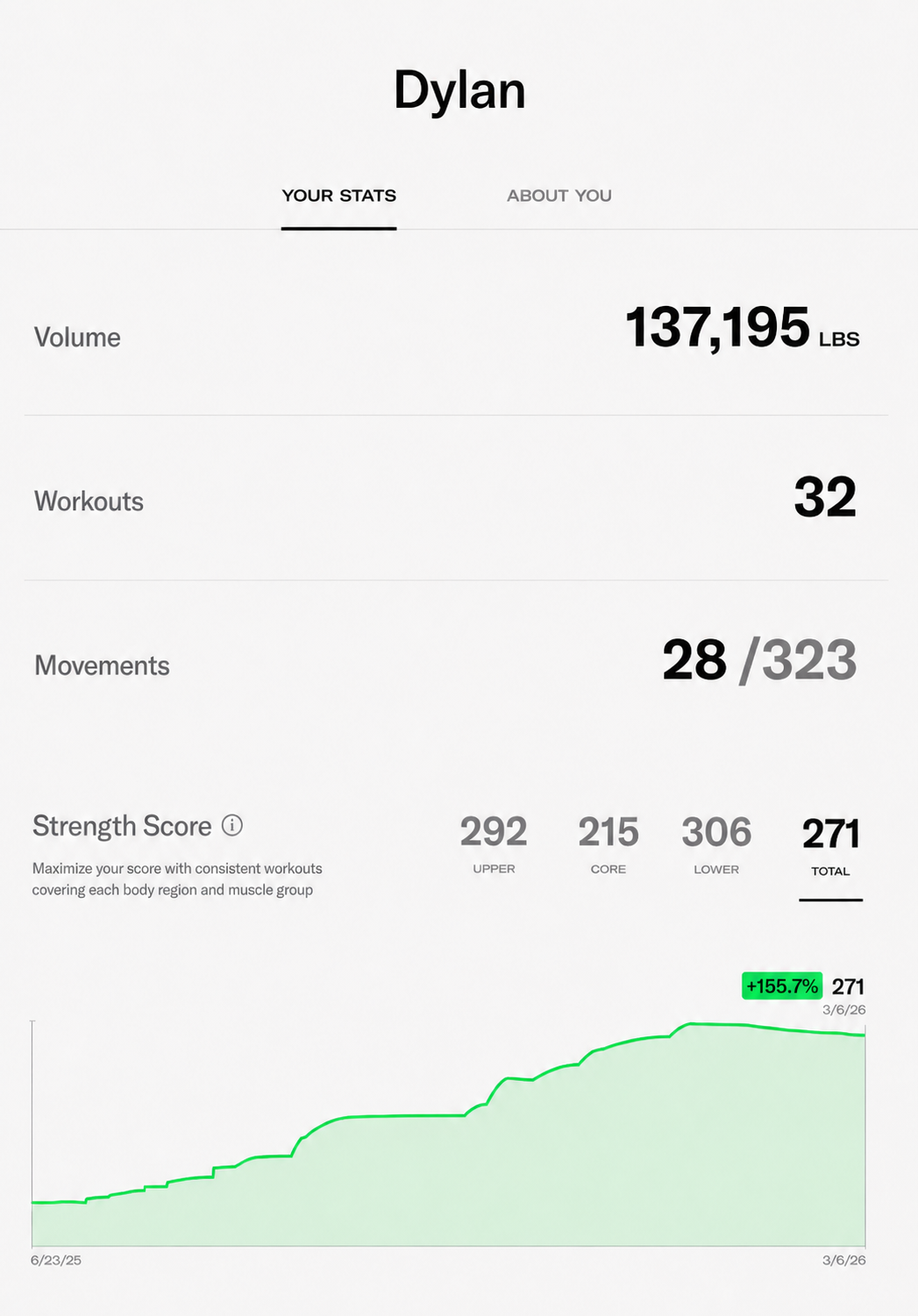
As Dylan and I built more trust, the training started to change. It became less about getting Dylan to fit exercise and more about helping exercise fit Dylan’s life. At my small studio, we used Tonal, and that helped a lot because Dylan could actually see his strength improving. He could see the numbers change, and he could see that showing up consistently and working hard was making him stronger. That mattered because progress was not just something I was telling him was happening. He could see it for himself.
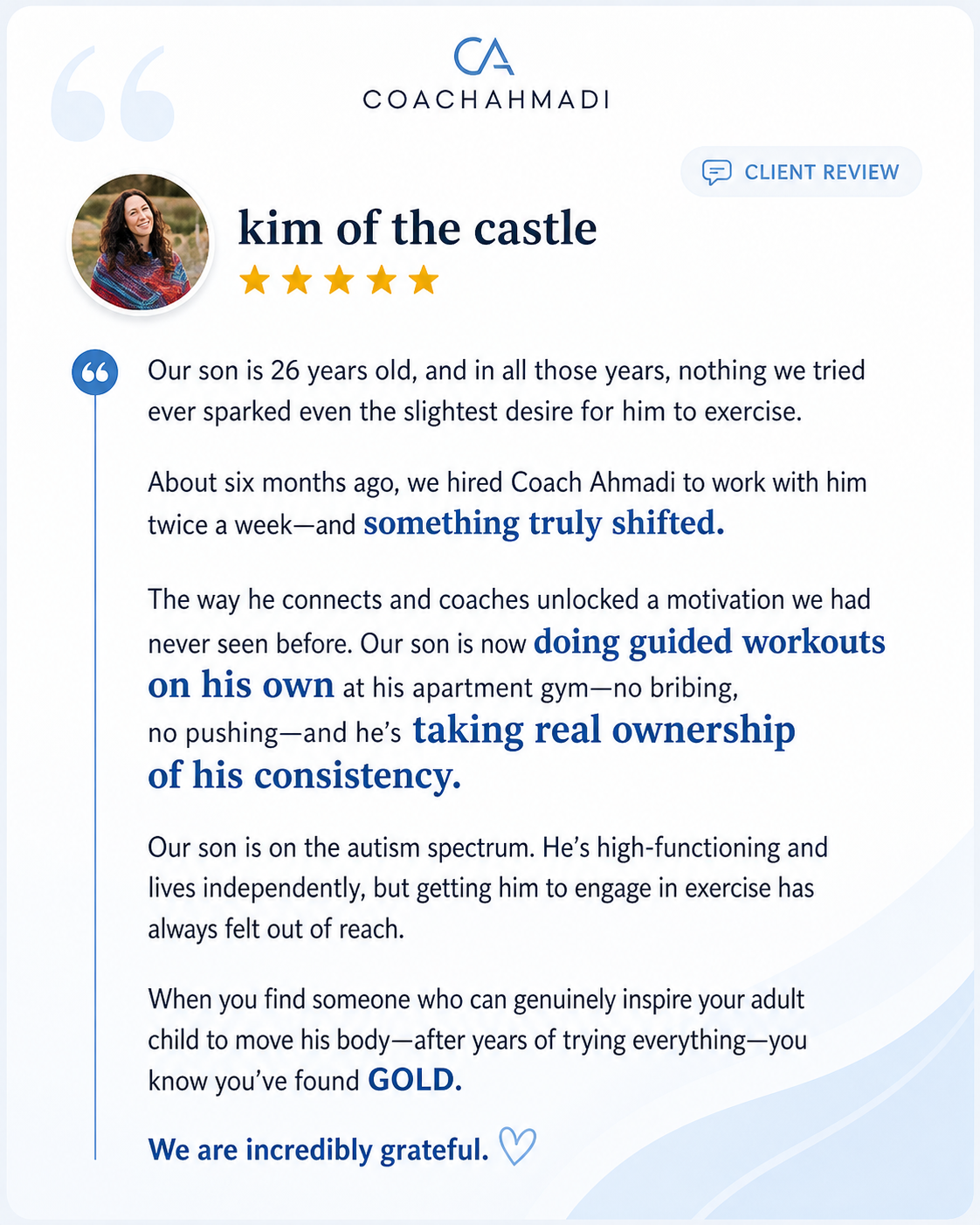
At a certain point, I went to Dylan’s apartment complex to help him build a simple routine in his apartment gym so exercise would not only exist when he was with me. The goal was to make it part of his actual life, in his own environment, and over time that started to happen. Eventually, Dylan became comfortable enough that he did not need me there and could train on his own, which is really what I wanted all along. The goal was never to make Dylan fit the plan. The goal was to help the plan fit Dylan long enough for exercise to become his own.
I still check in with him, and I encourage him to reach out if he needs anything. In my experience, when someone has trusted support, they usually do more and get better results, not because they are being forced and not because someone is standing over them, but because they know they are not doing it alone. Most coaching does not fail during the session. It fails between sessions, when real life shows up and the person is left to figure it out by themselves.
That is why this meant so much to me. When I read from Dylan’s mom that he was following his program and taking his younger sister with him to the gym, I got a sense of fulfillment that encourages me in my direction, a sense of joy that I have a hard time putting into words.
I do what I do because I’ve lost too many people in my life too early in their lives. A lot of what takes our loved ones’ lives too early can be helped to a big degree with our daily choices and habits, and research keeps proving it. Good sleep, the right nutrition, and exercise can be as powerful as medicine, but it needs to be individualized, and now it can be at a prescription level, based on valid research.
That’s what I do.
I am deeply passionate about this work. My clients’ goals are my motivation, research helps provide the path, my experience helps with the daily details and the adaptability needed to individualize the plan, and client success is always the goal.