
Designing an Injury Recovery Plan That Gets You Back to Performance — As Efficiently As Possible
Most injury plans focus on the tissue.
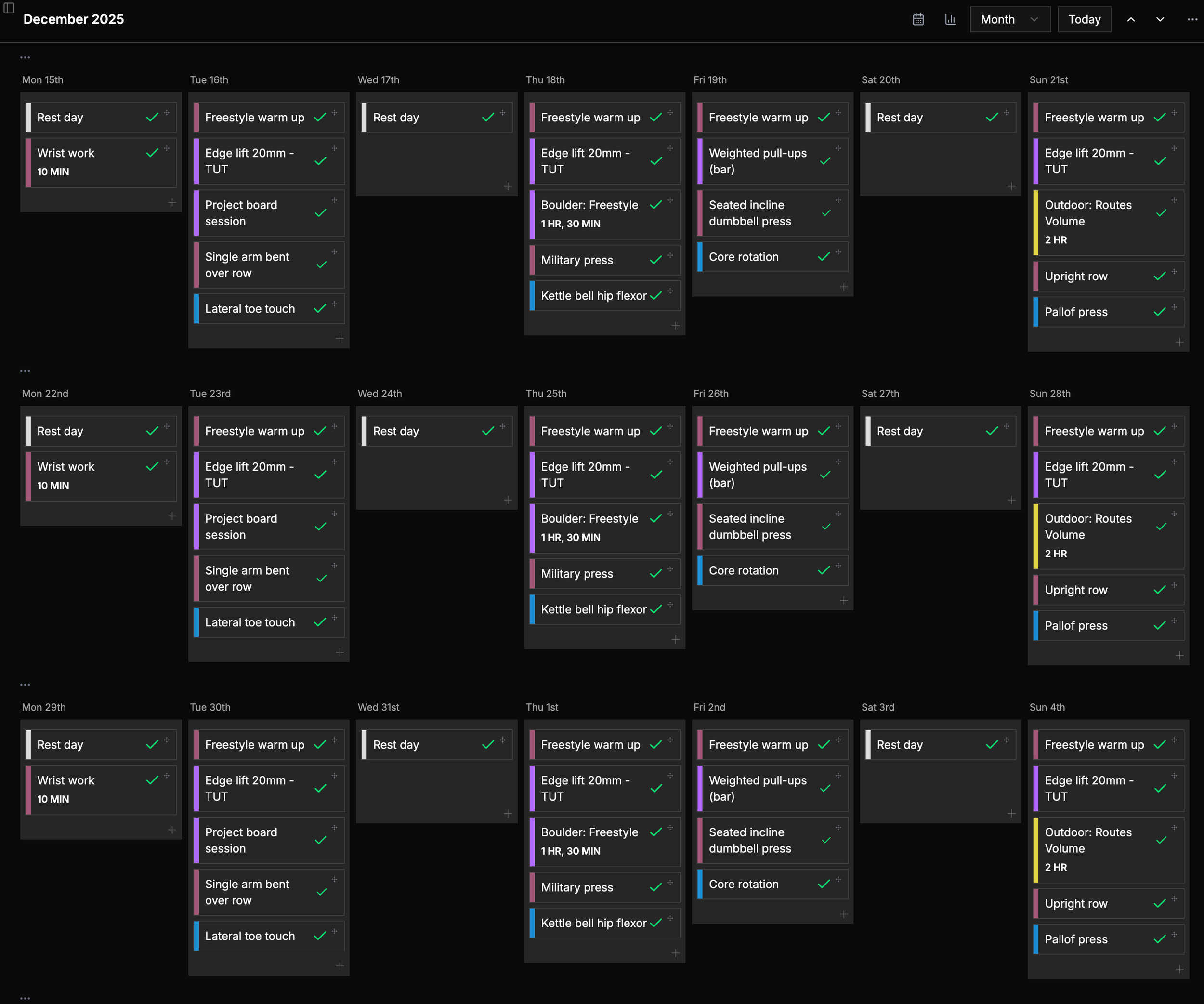
Training Plan Prior to Injury
And they should.
If a tendon is irritated, you treat the tendon. If pain is present, you manage load. If capacity is reduced, you rebuild it using current evidence.
That part isn’t controversial.
Where things break down is not in the exercises — but in the design of the training plan around them.
I will soon be working with performance athlete Leon (@Leon_do).
The objective isn’t simply symptom reduction.
It’s returning him to performance-level output — as efficiently as possible — without the relapse cycle that derails so many high performers.
That requires more than selecting the right rehab protocol. It requires designing the entire load architecture intelligently.
Instead of isolating one joint or backing everything down indefinitely, the plan will include:
Clear intensity ceilings
Defined weekly volume parameters
RPE-governed strength exposure
Structured recovery spacing
Pre-set progression thresholds
Real-time feedback integration
And critically — collaboration.
Leon already works with a coach who understands his strengths, weaknesses, and performance history. That knowledge matters. The plan must integrate his coach’s experience and technical insight, not override it.
When training design respects both current research and real-world performance demands, progression becomes controlled rather than reactive.
The next step isn’t “do more.”
It’s gathering the right inputs before expanding output — objective markers, subjective signals, and constraint mapping — so load progression accelerates rather than relapses.
That’s how performance is rebuilt.